
Biomass Boiler Systems: Installation and Running Costs
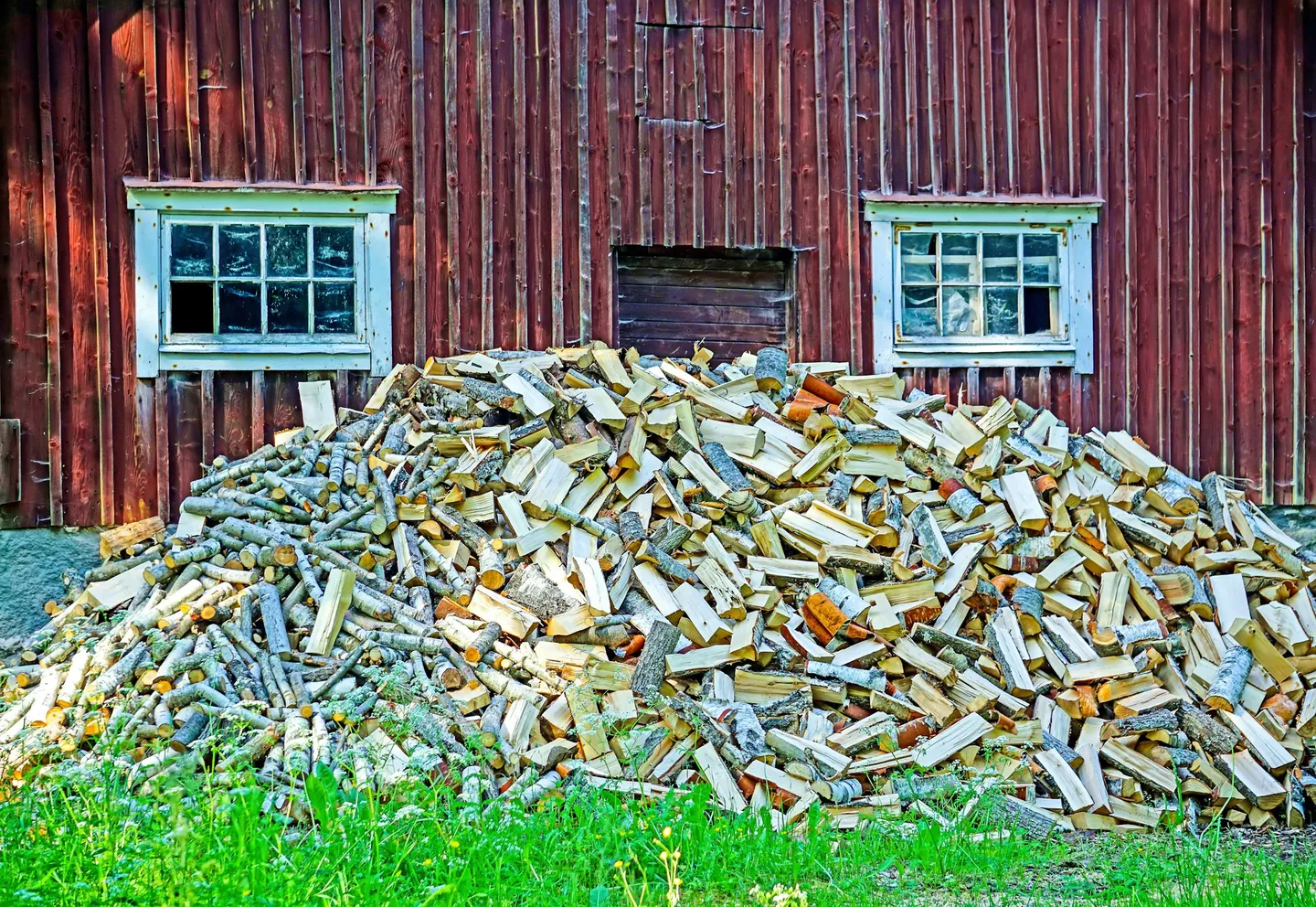
Photo by Ingemar Johnsson on Unsplash
Biomass boilers are a practical heating option for rural UK properties without mains gas connection. These systems burn wood fuel to provide central heating and hot water, offering lower carbon emissions than oil or LPG whilst maintaining similar operational patterns. Understanding the genuine costs, space requirements, and maintenance commitments is important before committing to installation.
Understanding biomass heating technology
Modern biomass boilers operate through two-stage gasification combustion, burning wood fuel at temperatures between 950°C and 1,200°C. The process begins in a primary chamber where fuel releases volatile gases, which then combust in a secondary chamber with precisely controlled airflow. This approach achieves efficiencies of 85-97%, well above traditional wood burning systems that typically reach just 50-70%.
A lambda probe monitors oxygen levels in flue gases and adjusts air supply automatically. This continuous adjustment maintains efficient combustion throughout the burn cycle. The boiler heats water for radiators and domestic hot water, working as a direct replacement for oil or gas systems in most installations.
Three distinct boiler types serve different requirements. Wood pellet boilers use compressed sawdust cylinders measuring 6mm in diameter, which feed automatically from storage hoppers via auger or vacuum systems. These systems ignite automatically, clean their heat exchangers without manual intervention, and compact ash for removal every few weeks. Domestic pellet boilers range from 10kW to 45kW, with the upper limit being the maximum size eligible for government grants.
Log gasification boilers suit those with access to affordable firewood who accept daily manual loading during winter months. The downdraft design burns logs from the bottom, passing gases through a ceramic nozzle before secondary combustion. A typical loading chamber holds 145-185 litres of logs, providing 24 hours or more of heating in moderate weather. These achieve 90-93% efficiency whilst reducing equipment costs compared with automated systems.
Wood chip boilers remain primarily commercial installations due to storage demands. Chips have roughly one-third the energy density of pellets, requiring much larger storage facilities. Properties with woodland or local chip supply access can achieve running costs of 2.5-5.5p per kWh, well below other heating fuels. Some manufacturers now offer hybrid log-pellet systems that automatically switch to pellet mode when logs burn out.
Property suitability assessment
Biomass heating works best in specific circumstances. Rural properties without mains gas connection, particularly those using oil, LPG, or electric heating, are the primary market. Larger homes with heat demands above 15,000 kWh annually benefit most, as do properties with outbuildings that can house boilers and fuel storage separately from living spaces.
The technology particularly suits farms and estates with woodland access, period properties where heat pump installation faces constraints, and homes in conservation areas where external heat pump units might encounter planning objections. Successful installations share common characteristics: adequate delivery access for fuel lorries, space for a dedicated plant room of at least 10 square metres, and owners comfortable with active heating system management.
Biomass generally proves unsuitable for small urban or suburban homes, properties in smoke control areas unless using DEFRA-exempt appliances, flats, and well-insulated new builds where heat pumps offer better efficiency. The Boiler Upgrade Scheme explicitly restricts biomass grants to rural, off-gas-grid properties, reflecting this market positioning.
Installation costs and system components
Total installation costs for a standard automatic pellet boiler suitable for a 3-4 bedroom home range from £15,000 to £25,000. This includes the boiler unit at £7,000-£14,000, fuel storage hopper or silo at £1,500-£3,500, buffer tank at £1,100-£2,000 for 500 litres, flue system at £1,500-£2,500, and installation labour at £1,500-£3,000. Industry data shows average biomass system prices of approximately £19,000 as of early 2025.
Log gasification boilers cost less overall, typically £10,000-£20,000 installed, because they lack automated feed mechanisms. However, these systems absolutely require large buffer tanks. The minimum specification calls for 50 litres per kW of boiler output, meaning 750-1,500 litres for typical domestic installations. This buffer tank stores heat from batch burning and prevents the boiler from cycling excessively.
Several factors increase costs beyond base figures. Complex flue runs requiring multiple bends or extended external routing add £1,000-£2,000. Properties needing building work for dedicated plant rooms face £3,000-£8,000 additional costs. London and Southeast installations typically carry a 10-15% regional premium, whilst remote Scottish locations add 15-20% for travel time and logistics.
Fuel storage solutions affect both capital and ongoing costs. A 2-3 tonne internal hopper costs £1,500-£2,500, the minimum for practical bulk delivery. External silos holding 4-7 tonnes run £2,200-£4,500 but enable less frequent deliveries. Underground bunkers with gravity feed offer convenience but require major groundwork investment. Most pellet suppliers require minimum orders of 2-3 tonnes for blown delivery, making adequate storage necessary for economic operation.
Fuel costs and operational expenses
Current UK fuel pricing shows wood pellets at £280-£400 per tonne for bulk blown delivery, equivalent to approximately 5.8-8.1p per kWh when accounting for boiler efficiency. Bagged pellets cost more at £350-£400 per tonne but suit smaller installations without bulk storage capacity.
Wood chips remain the cheapest biomass fuel at £80-£200 per tonne, equivalent to 2.5-5.5p per kWh, though storage requirements and handling complexity limit domestic appeal. Logs fall between pellets and chips in cost at £60-£150 per cubic metre, potentially reaching near-zero for those with their own woodland.
A typical 3-bedroom semi-detached home using around 18,000 kWh of heat annually would spend approximately £1,000-£1,600 on wood pellets, £500-£1,150 on wood chips, or £800-£1,600 on logs. For comparison, the same property would spend £1,200-£1,500 on heating oil, £1,700-£2,200 on LPG, £1,150-£1,250 on mains gas, or £1,100-£1,600 running an air source heat pump.
Maintenance costs exceed those of gas or heat pump systems. Annual servicing runs £180-£550 for automatic pellet boilers, more than double gas boiler servicing costs. Add chimney sweeping at £80-£120 annually, component replacements including igniters every 3-5 years at £100-£250, seals every 2-3 years, and electricity to run pumps and augers at £100-£180 annually. Total annual maintenance reaches £400-£700 for automated systems.
Against mains gas, pellet heating costs roughly match for fuel itself, but higher maintenance makes biomass approximately 20-40% more expensive overall. Against oil, LPG, and direct electric heating, biomass delivers clear savings of £300-£3,000 annually depending on the fuel being replaced.
Government grants and financial support
The Boiler Upgrade Scheme provides the main support mechanism for domestic biomass installations. Administered by Ofgem and running until December 2028, the scheme offers £5,000 toward biomass boiler installation. Eligibility criteria are notably stricter than for heat pumps.
Biomass grants require properties to be both in a rural location and off the mains gas grid. Heat pumps face no such restriction. Self-build properties cannot claim biomass grants, though they qualify for heat pump support. The boiler must have a maximum output of 45kW, an emissions certificate showing low particulate and NOx output, and installation by an MCS-certified contractor. Properties also need a valid Energy Performance Certificate less than 10 years old.
The application process is installer-led. Homeowners don’t apply directly but rather find an MCS-certified installer who handles the grant application to Ofgem. The grant value is deducted upfront from quotations, so homeowners never handle the grant funds themselves. Installations must complete within 120 days of voucher issue.
The former Renewable Heat Incentive closed to new domestic applicants in March 2022, though existing participants continue receiving quarterly payments for their seven-year term. The RHI paid 7.27-12.2p per kWh of heat generated, which could deliver payback periods under four years for high-usage properties.
Scotland operates separately from the BUS scheme, offering up to £7,500 grant plus £7,500 interest-free loan through Home Energy Scotland. However, applicants must show that heat pumps are unsuitable for their property before biomass will be approved, reflecting Scotland’s heat pump priority. Remote and island areas receive an additional £1,500 uplift.
Wales residents can access both the BUS scheme and Green Homes Wales, which offers interest-free loans of £1,000-£25,000 over up to 10 years. Northern Ireland currently lacks an equivalent scheme following the Boiler Replacement Scheme closure in September 2023. Limited funding exists through the Affordable Warmth Scheme and Northern Ireland Sustainable Energy Programme for qualifying low-income households.
VAT on biomass boilers and installation remains zero-rated until March 2027. Multi-fuel boilers capable of burning coal or oil don’t qualify and incur standard 20% VAT. Biomass fuel itself carries 5% VAT.
Space requirements and daily operation
A complete biomass system requires approximately 10 square metres of dedicated space. The boiler itself may be no larger than a large fridge-freezer, but automated systems need room for fuel feed mechanisms and ash handling. The buffer tank, typically 300-1,000 litres for pellet systems and 1,000-2,000 litres for log boilers, requires its own floor space. Adequate clearances for maintenance access and ventilation must also be maintained.
Single-garage conversions are common, as are purpose-built plant rooms in outbuildings connected to the house via insulated underground pipes. The separation from living space reduces noise and eliminates any minor odours associated with fuel storage or ash handling.
Fuel storage must accommodate meaningful quantities for economic bulk delivery. A typical 3-bedroom home uses 3-4 tonnes of pellets annually, suggesting storage capacity of at least 2 tonnes for sensible delivery intervals of 2-3 times per heating season. Delivery tankers can blow pellets pneumatically up to 20-30 metres from the storage point, allowing some flexibility in silo placement.
Automation levels vary dramatically by system type. Modern pellet boilers require minimal daily attention: perhaps a weekly visual check and ash box emptying every 4-8 weeks. Self-cleaning heat exchangers and automatic ignition make them genuinely comparable to oil boilers in convenience, albeit with greater long-term maintenance involvement. Log boilers demand considerably more effort: manual loading 1-3 times daily during heating season, more frequent ash removal, and genuine commitment to fuel preparation and handling.
Air quality compliance requires attention, particularly in Smoke Control Areas covering most urban and suburban locations. Only DEFRA-exempt appliances can legally burn wood in these zones. Non-exempt installations risk penalties of £175-£1,000. Most quality biomass boilers meet exemption requirements, but verification is necessary before purchase. Rural installations generally face fewer constraints, though domestic wood burning accounts for 20-25% of UK urban PM2.5 particulate pollution, making modern, low-emission equipment and proper fuel quality genuinely important.
Financial returns and payback calculations
Payback calculations reveal that biomass heating’s financial case has weakened since the Renewable Heat Incentive closed, but remains reasonable in specific circumstances.
Replacing LPG heating offers notable savings. A 4-bedroom detached house currently spending £2,200 annually on LPG, switching to pellets at £1,400 annual fuel cost plus £500 maintenance, saves approximately £300 annually. After a £5,000 BUS grant reduces net installation cost to around £18,000, payback exceeds 60 years on fuel savings alone. This is uneconomic purely on cost grounds, though carbon reduction provides additional motivation.
Replacing oil heating in a large, poorly-insulated rural property presents better economics. If annual oil spending reaches £2,500 and pellets cost £1,500 plus £500 maintenance, annual savings of £500 repay a net £17,000 investment in 34 years. This lengthy period approaches the 20-25 year boiler lifespan, making the proposition borderline.
Access to cheap fuel changes the picture entirely. Homeowners with woodland producing logs for minimal cost, or agricultural properties able to source chips at £60 per tonne, face much lower running costs. A large farmhouse using effectively free log fuel saves £1,500-£2,000 annually compared with oil, achieving payback within 8-12 years.
For most domestic purchasers today, honest assessment suggests biomass is not primarily a money-saving investment. Its value lies in carbon reduction (90% lower emissions than oil), energy security through locally-sourced fuel independence, and suitability for properties where heat pumps face installation constraints. Those prioritising pure financial returns in off-gas areas should compare carefully with air source heat pumps, which receive higher BUS grants at £7,500, have lower maintenance costs, and face fewer eligibility restrictions.
Equipment selection and installer qualification
The UK market features premium Austrian and German manufacturers whose equipment commands higher prices but delivers reliability and longevity that budget alternatives often lack.
Froling offers the widest domestic range, from compact pellet boilers through mid-range gasification to premium options. Their distributor, Freedom Green Energy, maintains strong UK support. ETA, distributed by Innasol, matches Froling on quality with particularly well-regarded control systems. Windhager produces notably compact pellet boilers, with the BioWIN 2 Touch requiring just 1.5 square metres of floor space, alongside robust log and chip systems. Hargassner completes the premium group, known for build quality and long service intervals.
For UK-manufactured options, Grant produces pellet boilers in their Spira and Vecta ranges with strong domestic support networks. Condensing models achieve 97% efficiency. These suit buyers preferring local manufacture and established service infrastructure.
Pricing differences between brands typically run £2,000-£5,000 for comparable output units. Cutting corners on equipment choice risks unreliability and poor long-term efficiency. Low seasonal efficiency, sometimes as low as 50%, commonly results from undersized buffer tanks, oversized boilers cycling excessively, or poor-quality components. Premium equipment and proper system design largely prevent these problems.
MCS certification is necessary for any installation seeking BUS grant funding, and advisable regardless for consumer protection and warranty purposes. Expect to obtain at least three quotations. Notable price variation for identical equipment reflects different installation approaches and company overheads. HETAS registration provides additional solid-fuel-specific accreditation worth checking.
Fuel sourcing establishes a long-term relationship requiring as much consideration as equipment selection. Major national pellet suppliers include Woodlets (Scottish production), Y Pellets (Goole-based), and AMP Clean Energy (nationwide blown delivery). ENplus A1 certification ensures consistent 6mm diameter, under 10% moisture, and high calorific value. This specification should be non-negotiable for pellet purchases. The Biomass Suppliers List confirms fuel meets sustainability requirements and shows responsible sourcing.
Practical considerations for rural properties
Biomass boilers occupy a specific niche in UK low-carbon heating. They suit rural properties not connected to mains gas, particularly larger homes with high heat demands, available space for equipment and fuel storage, and owners willing to accept greater maintenance involvement than gas or heat pump systems require.
The technology works. Modern automated pellet boilers achieve excellent efficiency, operate reliably for 20+ years, and deliver genuine carbon reductions approaching 90% compared with oil or LPG. The financial case has weakened notably since the Renewable Heat Incentive closed in 2022. Current payback periods often exceed practical equipment lifespans without access to cheap fuel such as free logs from own woodland or agricultural chip supplies.
For most off-gas-grid properties, air source heat pumps now offer stronger economics given their higher BUS grants, lower maintenance costs, and wider eligibility. Biomass remains the better choice where heat pumps face genuine installation constraints, where good cheap wood fuel is available, or where owners specifically value the technology’s fuel security and local supply characteristics.
Those proceeding should budget £15,000-£25,000 for a complete domestic pellet system, less the £5,000 BUS grant where eligible. Allow 10 square metres minimum for equipment and storage. Use only MCS-certified installers. Select premium European equipment from established manufacturers. The technology rewards proper specification and quality components. Cutting corners on system design or equipment quality risks both efficiency and reliability throughout the 20+ year ownership period.