
Electric Vehicle Charging: UK Rural EV Infrastructure Overview
Part of: Off-Grid Power for Rural UK Homes: Systems, Costs & Setup
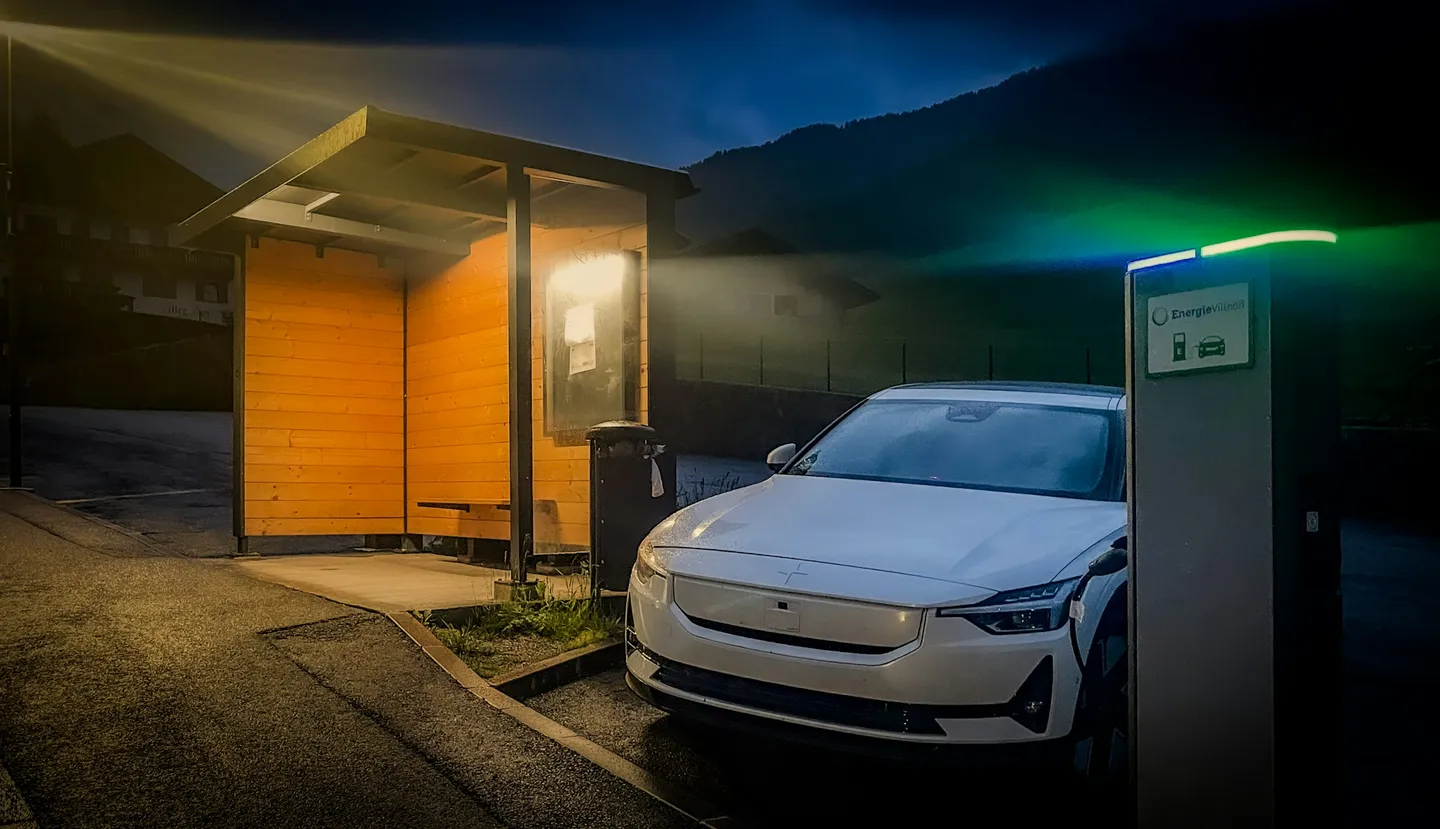
Photo by Bernd 📷 Dittrich on Unsplash
Explore the current state of electric vehicle (EV) charging infrastructure in rural UK. This article provides an overview of the challenges and opportunities for expanding EV access in less urbanized areas, highlighting key initiatives and future prospects for rural EV adoption.
Rural Britain faces a contradiction in electric vehicle adoption. While rural charging infrastructure grew by 45% year-on-year, outpacing urban growth of 35%, the distribution remains sharply uneven. Only 15.4% of the UK’s 73,334 public charging devices serve rural areas, despite these regions covering most of Britain’s landmass. The Competition and Markets Authority warns of “charging deserts” forming in remote areas, which could shut rural communities out of the electric transition.
The numbers tell the story. London has 250.4 charging devices per 100,000 population, while Northern Ireland manages just 35.6. Yorkshire and Humber sits at 65.6 devices per 100,000, a quarter of London’s provision. This creates what researchers call a “postcode lottery” for EV access, where your address determines whether you can practically drive electric.
Scotland’s Rural Charging Progress
Scotland shows what coordinated investment can do. The ChargePlace Scotland network runs 2,800+ public charging points, with 40% located outside urban centres. This happened by design. Since 2011, the Scottish Government has invested £65 million in charging infrastructure, deliberately targeting rural areas where commercial operators had little interest.
The results are clear. Even remote Highland areas now have 185 charging devices, and the £4.5 million Rural and Island Infrastructure Fund specifically targets communities where private investment remains commercially unviable. Transport Scotland’s approach integrates charging points with existing transport hubs, creating multimodal networks that serve both residents and tourists along routes like the North Coast 500.
Wales and Northern Ireland: Different Paths
Wales is pursuing ambitious targets with one public charge point for every 7-11 electric vehicles by 2025, backed by £15 million in new funding announced in 2024. The Welsh strategy puts EV charging alongside renewable energy generation at rural transport interchanges. Grid capacity constraints in rural Welsh valleys, however, present ongoing challenges that technology alone won’t fix.
Northern Ireland tells a different story. With the lowest charging provision in the UK at 35.6 devices per 100,000 population and only 8.6 rapid chargers per 100,000, the region risks falling behind. The lack of a coordinated investment strategy, unlike Scotland’s approach, has created real accessibility problems for rural Northern Irish communities trying to go electric.
Engineering Challenges in Rural Areas
Rural charging infrastructure faces technical barriers that urban planners rarely deal with. Grid capacity limitations are the main obstacle, since rural electrical networks were built for modest residential loads rather than multiple rapid chargers. Research indicates rural areas require 50% higher grid reinforcement costs compared to urban installations, discouraging private investment and slowing rollout.
The three-phase power problem makes things worse. While urban areas typically have three-phase supply enabling 22kW charging, most rural properties run on single-phase 230V systems limited to 7.4kW. Converting to three-phase power involves major electrical work and may be impossible in some locations due to infrastructure limitations going back decades.
Weather adds another complication. Cold conditions reduce EV battery efficiency by 20-55%, with charging times increasing as battery management systems restrict charging rates for safety. Rural locations experience more extreme weather, higher wind loads, and more frequent power outages, requiring tougher equipment specifications and backup systems that push up installation costs.
Home Charging: The Rural Advantage
Despite infrastructure challenges, rural residents have one real advantage: space. With 80% of EV drivers mainly charging at home, rural properties with driveways and garages provide ideal conditions for overnight charging. The OZEV EV Chargepoint Grant offers up to £350 toward installation costs until March 31, 2025, particularly benefiting properties with off-street parking common in rural areas.
For properties without traditional driveways, cross-pavement charging solutions are emerging. A new £25 million government scheme launching in late 2025 will provide £350 grants for cable gullies and channels running beneath pavements, addressing the 40% of UK households lacking off-street parking. This technology is particularly relevant for historic rural villages where properties front directly onto narrow streets.
Community Solutions Fill the Gaps
Rural communities aren’t waiting for commercial operators. The Co Charger platform enables peer-to-peer sharing of existing home chargers, potentially making 700,000 chargers available that sit unused 90% of the time. This needs no new infrastructure, just neighbourly cooperation and a smartphone app.
Charge My Street raised £130,000 through community shares across Northern England, planning 100 chargers at £10,000 each. The cooperative model offers 2% interest from 2023, rising to 5% from 2025. It shows how community ownership can address market failures where neither public nor private investment appears. Parish councils from Hovingham in North Yorkshire to Disley in Cheshire lead village-scale installations, often starting with just two chargepoints that encourage broader adoption.
Workplace charging turns rural businesses into charging hubs. The Workplace Charging Scheme provides up to £350 per socket for up to 40 sockets, with 75% support rates for rural areas. The EV Infrastructure Grant for Staff and Fleets offers up to £15,000 per site for businesses with fewer than 249 employees, recognising that rural SMEs often serve as community hubs beyond their commercial role.
Mobile Charging Services
When fixed infrastructure isn’t there, mobile solutions fill in. ZAPME runs the world’s first mobile EV charger service with UK-wide coverage, while EVBOOST.ME provides 24/7 mobile fast charging nationally. The RAC has integrated 5kW mobile chargers into patrol vehicles, offering on-site charging for 99% of UK EVs without needing heavy batteries for transport.
These services matter in rural areas where breakdown recovery might otherwise require expensive flatbed transport to distant charging stations. Mobile charging also lets events, agricultural shows, and temporary sites offer EV support without permanent infrastructure investment. The flexibility particularly suits rural tourism, where demand swings with the seasons.
Government Funding Targets Rural Areas
The Local Electric Vehicle Infrastructure (LEVI) Fund’s £450 million allocation weights funding toward rural and underserved areas. This England-wide programme prioritises residents without off-street parking, focusing on low-power local chargepoints suitable for overnight charging rather than the rapid charging corridors that dominate urban planning.
Scotland continues to lead with targeted rural investment. Beyond the £4.5 million Rural and Island Infrastructure Fund, cross-pavement charging pilots in East Lothian, Renfrewshire, and Perth and Kinross provide up to £3,500 per household for pavement gullies and pop-up bollards. These pilots test solutions for historic villages where standard charging infrastructure doesn’t fit.
The Community Energy Fund, replacing the Rural Community Energy Fund, provides £10 million for English rural communities. Stage 1 feasibility studies receive up to £40,000, while Stage 2 business development grants reach £100,000. Recipients like Congleton Hydro (£73,511) and Norham Development Trust (£100,000) combine EV charging with renewable energy projects, creating local energy systems that sustain themselves.
What Works: Successful Rural Projects
Project PACE in Lanarkshire reshaped regional charging through strategic planning. This £7.5 million project created 44 universally accessible charging hubs with 173 chargers, saving £2.6 million in connection costs through coordinated grid planning. It supports 5,000 additional EVs and shows how strategic approaches can dramatically cut per-unit costs.
Hovingham Parish Council’s experience is useful for village-scale deployment. This North Yorkshire village of 180 properties installed two 7kW chargepoints with £4,770 ORCS funding. Usage increased 300% within one year, supporting both residents and rural tourism. Starting small, proving demand, then expanding step by step gives other rural communities a model to follow.
Farm diversification creates unexpected successes. InstaVolt’s partnership with NFU Energy connects farmers with rapid charging opportunities. Converting unused agricultural buildings to charging hubs with solar integration generates £60,000+ per acre in lease agreements with revenue sharing. These partnerships turn farmers from energy consumers into energy providers, creating new income streams as traditional agricultural revenues face pressure.
The Economics of Rural EV Ownership
Rural drivers face higher transport costs than urban counterparts, making EV economics especially attractive. Annual fuel costs for 15,000 miles range from £546-£600 for electricity versus £1,255-£2,700 for petrol. Combined with roughly £500 in annual maintenance savings, rural EV owners save £1,200-£2,600 yearly, offsetting higher purchase prices within 3-5 years.
Installation costs vary but remain manageable with incentives. Home charger equipment costs £500-£1,500, with total installation ranging £1,000-£3,000. The OZEV grant reduces this by £350, while Scottish combined incentives can bring net costs down to just £249. For businesses, workplace charging schemes cover 75% of costs with better rural rates, making installation nearly cost-neutral for many rural enterprises.
Insurance adds some cost, with EV policies averaging 15-25% higher due to battery replacement costs. But the operational savings more than compensate, particularly for high-mileage rural drivers who benefit most from lower per-mile costs.
Technology Advances on the Horizon
The charging picture is changing fast. Tesla’s V4 Supercharger cabinet launching in 2025 supports up to 1.2 MW charging for both 400V and 800V systems, while BYD has demonstrated 1,000 kW charging enabling 5-minute sessions. These ultra-fast chargers make rural corridor charging viable by cutting stop times for long-distance travel.
Vehicle-to-grid technology turns rural EVs from transport into energy assets. Bidirectional charging enables EVs to support grid stability, provide backup power during outages, and generate revenue through energy trading. For rural properties with renewable generation, V2G creates real energy independence while earning money from excess capacity.
Wireless charging pilots in Detroit show dynamic charging capabilities that could change rural roads. Embedding charging infrastructure in road surfaces would eliminate range anxiety entirely, though current costs limit it to high-traffic corridors. As costs come down, rural A-roads could eventually become charging networks themselves.
Environmental Benefits in Rural Settings
Rural EV adoption produces outsized environmental benefits. Research shows every additional 20 zero-emission vehicles per 1,000 people reduces asthma-related emergency visits by 3.2%, with rural areas seeing bigger improvements because they start from lower baseline pollution. The absence of tailpipe emissions particularly benefits agricultural areas where air quality affects crop yields and livestock health.
Carbon reduction potential exceeds urban deployments through integration with rural renewable resources. EVs produce 30-50% lower lifecycle emissions with current electricity mixes, rising to 90% reductions when powered by renewable energy. Rural properties with space for solar panels and wind turbines can achieve carbon-negative transport when combining generation, storage, and vehicle-to-grid capabilities.
Noise reduction, often overlooked, matters for rural communities. Electric vehicles run near-silently, reducing disturbance to wildlife, livestock, and the quiet that attracts residents and tourists. For farms, quieter vehicles reduce stress on animals, which can improve productivity and welfare.
International Models
Norway achieved 88.9% EV market share in 2024 through broad rural coverage. With 27,000 public charging points providing 400+ chargers per 100,000 people, Norway ensures no location sits more than 50km from rapid charging. Their 98% renewable electricity supply maximises environmental benefits while proving that thorough rural coverage enables mass adoption.
Denmark reached 51.5% EV market share through policy consistency and infrastructure development that adds roughly one charger per five kilometres of roadway. The Danish model of integrating rural and urban planning ensures seamless nationwide coverage without creating two-tier access based on geography.
These examples prove that rural charging infrastructure isn’t a secondary concern but is central to national EV adoption. Countries that treat rural areas as equal partners in the electric transition achieve higher adoption rates and more equitable outcomes than those focused mainly on cities.
Where Rural Britain Goes From Here
Rural UK is at a turning point in electric vehicle adoption. Current infrastructure lags urban areas by a wide margin, but the combination of £450 million in government funding, community-driven solutions, and fast-advancing technology creates real opportunity. Scotland’s experience shows that early, coordinated investment changes rural accessibility. Community projects from Hovingham to Charge My Street prove that local initiative can overcome market failures.
For rural residents, the economics increasingly favour electric vehicles despite infrastructure gaps. Annual savings of £1,200-£2,600, combined with improving home charging options and mobile backup services, make EVs practical for rural life. Businesses are finding new revenue through charging infrastructure, while farms diversify income through energy generation and storage.
The transition needs continued government support, community involvement, and private investment. Grid capacity must expand, three-phase power needs to become more accessible, and charging networks need to reach everywhere. The direction is clear: clean transport supporting healthy communities, better air quality, and economic resilience. With proper planning and investment, rural Britain doesn’t have to be left behind. It can set the pace.
Related guides
- Off-Grid Power for Rural UK Homes: Systems, Costs & SetupOff-grid power for UK rural homes means generating and storing your own electricity with solar, wind, hydro, batteries and backup generators. This guide covers the systems, real costs and setup steps.
- Solar Power Systems for UK Rural Properties: A Comprehensive Sizing and Installation GuideThis detailed guide explores the unique challenges and opportunities of installing solar power systems on rural properties in the UK. It covers system sizing, installation considerations, grid connection, financial incentives, and long-term maintenance to help rural homeowners make informed decisions about adopting solar energy.
- Smart Battery Management: 20-Year Lifespan Energy Storage SystemsDiscover how modern smart battery management systems and lithium iron phosphate technology enable energy storage systems with lifespans of 15-20 years, ideal for rural energy independence. Learn about installation, maintenance, and the economics of long-term battery solutions.