
Electric Vehicles in Rural Britain: What the Data Actually Shows
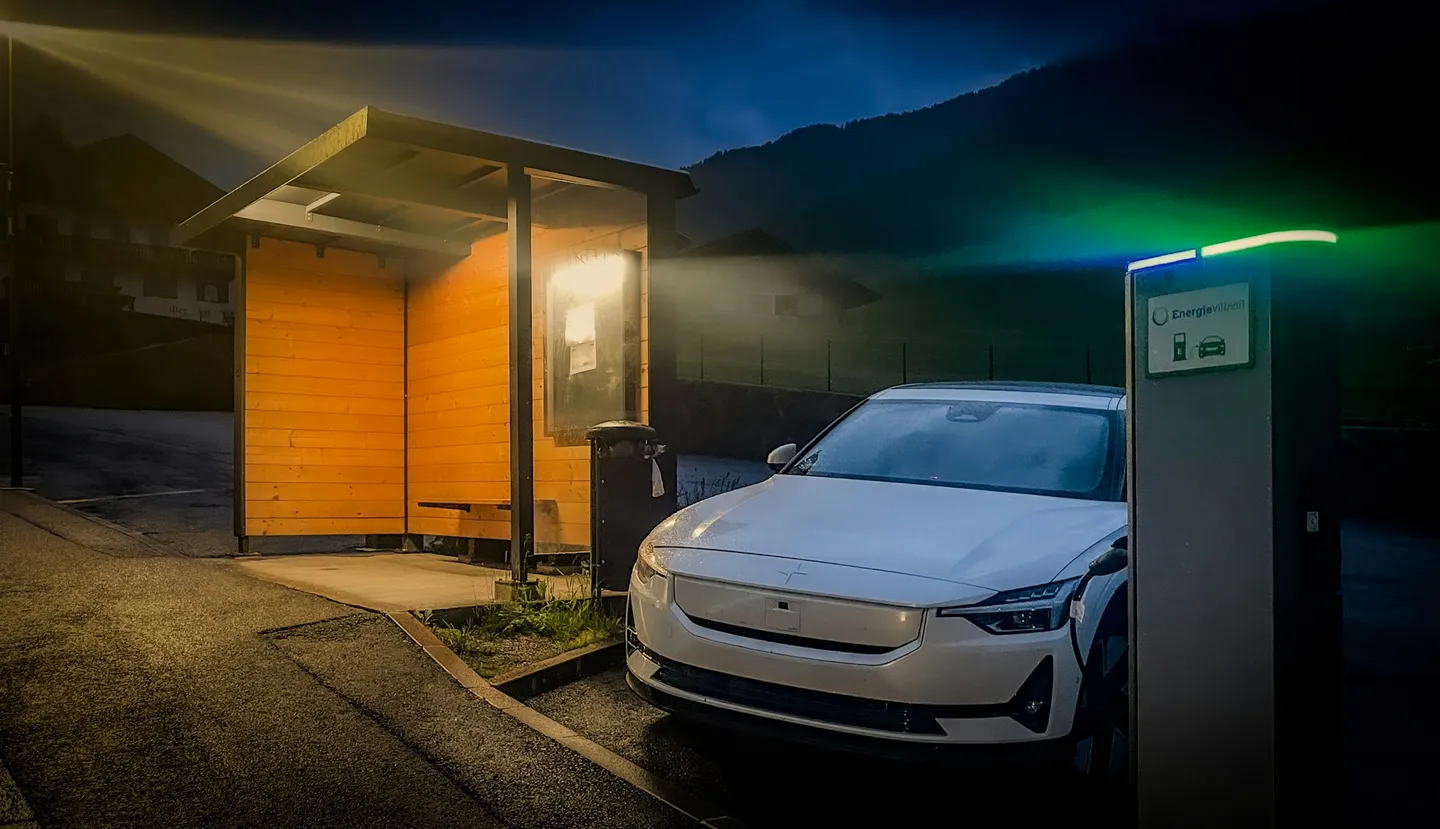
Photo by Bernd 📷 Dittrich on Unsplash
The official figures tell one story about electric vehicle adoption in rural Britain. The reality on the ground tells another. Rural areas hold 70% of England’s road miles but just 15.4% of charging infrastructure. Yet rural charging networks grew 45% year-over-year through January 2025, outpacing urban expansion. Modern EVs now deliver 200 to 300 miles of tested range under real conditions.
The question isn’t whether EVs work in rural Britain. Fifteen thousand rural households already drive them successfully. The question is whether your specific circumstances align with current capabilities, and whether you’re prepared to plan charging stops for the minority of journeys exceeding daily range.
The Charging Infrastructure Gap
Rural Britain operates 11,300 public charging devices, working out to one charger every 10 miles compared to London’s one per 0.75 miles. This represents genuine inequality in infrastructure provision.
The growth rate tells a different story. Rural charging infrastructure expanded 45% year-over-year through January 2025 against 35% urban growth. Northern Ireland lags with 36 devices per 100,000 population. Scotland’s ChargePlace Scotland network shows what targeted investment achieves, operating over 1,800 accessible charging points.
The UK now runs 17,356 rapid and ultra-rapid chargers at 50kW or above. Sixty-two percent of motorway service areas meet government targets for six ultra-rapid chargers per location. BP Pulse, Gridserve, InstaVolt, Shell Recharge and IONITY have committed over £6 billion through 2030.
BP Pulse operates 9,000+ charging bays following their £1 billion investment. Gridserve’s Electric Forecourts provide 350-360kW charging with solar canopies from Yeovil to Rutherglen. The infrastructure exists. The distribution remains uneven.
Home Charging Costs and Requirements
Home charging determines rural EV viability more than any other factor. A standard 7kW wallbox costs £1,000 to £1,110 installed after the £350 EV Chargepoint Grant for eligible flat owners and renters. This provides 25 to 30 miles range per hour, enough for overnight charging.
Smart chargers add £100 to £300 but enable scheduling with time-of-use tariffs. Octopus Intelligent Go charges 7p per kWh overnight versus 26p peak rates, creating annual savings of £467 against public charging for typical usage.
Rural properties face additional costs. Cable runs beyond standard distances cost £10 to £20 per meter. Groundworks through driveways add £200 to £500. Electrical upgrades push total costs to £1,300 to £1,700. Installing three-phase power for 11-22kW charging requires £3,000 to £20,000 depending on distance from existing infrastructure. Most sources recommend against this expense for residential use since overnight 7kW charging handles virtually all daily requirements.
Distribution Network Operators must approve installations. Standard 7kW chargers need simple G98 notification within 28 days. Higher-powered systems require G99 applications taking 30 to 60 working days or longer if network upgrades prove necessary. Since April 2023, demand connection customers no longer pay for distribution network reinforcement, only equipment solely for their own use. This removed what were previously quotes exceeding £1 million in extreme cases.
Off-Grid and Solar Solutions
Solar-powered EV charging requires minimum 2.5kWp capacity costing £8,500 to £10,000 to install, combined with 10-20kWh battery storage at £3,300 to £6,500 for 4kWh systems. Smart chargers like Zappi monitor solar generation automatically, prioritizing renewable energy.
Real examples exist. Isle of Gigha’s campsite operates the first island EV charger powered by solar and battery storage. Victron produces the only dedicated off-grid EV charger, programmable to protect household battery state of charge.
For rural properties with 5m/s or higher wind speeds, common in Northern Scotland, Wales and Northern England, wind power combined with solar provides year-round renewable charging. Planning challenges remain significant.
Government Funding Trajectory
The £450 million Local Electric Vehicle Infrastructure fund supports public charging for residents without off-street parking. July 2025’s additional £63 million includes £25 million for cross-pavement technologies. The £950 million Rapid Charging Fund targets 6,000+ high-powered chargers on motorways by 2035.
Reaching 300,000 public chargepoints by 2030 requires doubling current installation rates from 1,300 to 2,800 monthly. Whether this happens will determine if rural charging gaps close or widen.
Real-World Range Under Test Conditions
Official WLTP figures mislead consistently. What Car?’s comprehensive winter 2024 testing, driving vehicles until completely empty, found real-world ranges typically fall 21 to 37% below manufacturers’ claims.
The Tesla Model 3 Long Range achieved 293 miles at 3.9 miles per kWh, representing a 24.8% shortfall from its 390-mile WLTP rating. The Mercedes EQE 300 reached 300 miles with a 21% shortfall. The VW ID.7 Pro Match managed 268 miles with heat pump or 254 miles without.
Budget options performed more modestly. The MG4 Extended Range delivered 227 miles real-world from its 323-mile WLTP rating. The Jeep Avenger achieved 163 miles, a 33.1% shortfall from its 244-mile claim. The worst performer tested was the £74,000 Lexus RZ 450e at 159 miles and 2.5 miles per kWh, a 36.7% shortfall demonstrating price doesn’t guarantee efficiency.
How Rural Driving Affects Range
Speed dominates all other factors. Energy consumption increases exponentially following a cube rule. At 70 mph on motorways, range drops 30 to 40% compared to 50 mph driving typical of country B-roads.
One Highland EV owner reported typical range of 120 to 130 miles dropping to approximately 90 miles during sustained 70 mph motorway sections. Hills impact efficiency less than anticipated. While uphill driving increases consumption, regenerative braking recaptures energy on descents.
A Scottish Highlands owner found that “contrary to expectations, the electric car works really well in rural locations. Performance in hills is not a worry at all. Because driving speeds are generally much lower in mountains, the typical range is actually better than elsewhere in the country.”
Stop-start traffic on winding B-roads reduces efficiency through frequent acceleration. Lower average speeds can partially offset this penalty compared to sustained high-speed motorway driving.
Winter Performance Data
What Car?’s summer versus winter testing of identical vehicles found average range reductions of 18%, with performance varying by model. The Tesla Model Y lost only 11.8% range, dropping from 304 miles summer to 272 miles winter. The BMW i4 dropped 21.6% from 317 to 261 miles.
Heating systems draw battery power rather than using waste engine heat like combustion vehicles. Heat pumps improve efficiency 5 to 10%. VW ID.7 testing showed 268 miles with the £1,050 heat pump option versus 254 miles without, a 5.2% improvement worth 14 extra miles. You would need to drive 85,000 miles at expensive 79p per kWh public charging rates to recoup the heat pump’s cost through efficiency gains alone.
For typical UK winter temperatures of 0 to 7°C, plan for 15 to 20% range reduction. In severe cold reaching minus 10°C with heavy heating use, expect 20 to 40% reductions.
Pre-conditioning while plugged in provides the single most effective winter strategy. Heating the car and battery before departure while connected to the charger avoids draining the battery during driving. Using heated seats rather than cabin heating provides more energy-efficient targeted warming. Battery chemistry operates optimally between 15 to 45°C. Below this range, chemical reactions slow and capacity temporarily decreases.
Towing Impact on Range
Autocar’s real-world testing with a Skoda Enyaq iV 80 towing a 995kg Bailey Discovery caravan found range fell from 277 miles at 3.8 miles per kWh to 154 miles at 2.0 miles per kWh, a 55% reduction. What Car? testing confirmed 50 to 60% range losses for larger caravans and trailers, with lighter 500 to 750kg loads causing 25 to 30% reductions.
Aerodynamic drag matters far more than weight. Towing a boxy caravan at 60 mph requires fighting massive wind resistance. The BMW iX performed best in testing, losing 56% of range when towing. This still provided 150+ miles given its 426-mile unladen capability.
For rural users regularly towing horse boxes, livestock trailers or caravans, choose EVs with maximum towing capacity. The BMW iX xDrive50 and Kia EV9 Dual Motor lead with 2,500kg capacity, followed by the Polestar 3, Volvo EX90 and Mercedes EQS SUV at 2,200 to 2,400kg.
Ground Clearance for Rural Roads
Most EVs sacrifice 10 to 30mm ground clearance compared to combustion equivalents due to battery placement. The Kia EV9 AWD leads mainstream options with 225mm clearance, matching its 2,500kg towing capacity and 315-mile range. The Porsche Macan EV also achieves 225mm with optional air suspension.
The VW ID.4 offers 210mm clearance with 321 to 349-mile WLTP range, translating to 230 to 310 miles real-world. This makes it practical for rough rural lanes. Most compact EVs manage only 140 to 160mm. The Tesla Model 3 sits at 140mm, MG4 at 150mm, and Nissan Leaf at 160mm. These prove adequate for maintained roads but problematic for rutted farm tracks or flood-prone lanes.
Specialist rural EVs are emerging. The Scottish-built Munro MK1 boasts 480mm ground clearance and 800mm wading depth for £49,995 plus VAT. The Czech MWM Spartan 2.0 offers genuine 4x4 capability with 150-mile range at £49,995.
Range Anxiety Versus Reality
Zap-Map’s 2021 survey of 3,300+ UK EV owners found 53% had driven over 200 miles in a single trip and 7% had exceeded 500 miles. EV.Energy’s 2023 survey showed 77% had never, rarely or only occasionally experienced range anxiety, with less than 23% regularly concerned.
Nissan’s European survey of 7,000 drivers found 70% of existing EV owners reported range experience better than initially expected. Yet 58% of non-EV owners cited shorter driving range as their biggest concern. Recurrent’s survey documented peak range anxiety 1 to 2 years before purchase at 78% of future owners, falling dramatically after 3 to 5 years of ownership to 59% reporting little to no anxiety.
The average UK journey spans 8.2 miles, with typical drivers covering 20 miles daily, 140 miles weekly and 7,000 miles annually. European research shows 8 in 10 drivers travel less than 62 miles per day. Modern EVs with 200+ mile real-world range exceed daily needs by substantial margins.
One Scottish Highlands owner found “a rapid charger, 80% in 30 minutes, at least every 60 miles in every direction from house.” This proves adequate spacing for comfortable rural driving.
Nissan’s data showed EV drivers actually drive more than combustion drivers, covering 8,825 miles versus 8,451 miles annually. Range limitations don’t constrain real-world usage.
Route Planning Tools
Zap-Map dominates UK EV driver usage, mapping 95%+ of UK public chargers with 70% showing real-time availability updated every five minutes. The app includes networks from Instavolt, Osprey, Gridserve, BP Pulse, Tesla Superchargers, ChargePlace Scotland and dozens more. Route planning suggests charging stops based on your specific vehicle’s range, with community features providing recent charger reviews and status updates. Premium membership at £47.99 per year adds CarPlay and Android Auto integration plus 5% charging discounts.
A Better Route Planner provides the most accurate range predictions by incorporating real-time traffic, weather, temperature, elevation changes, terrain and payload. Users consistently report accuracy within 5% of actual energy consumption. ABRP’s unique advantage is accounting for hills, critical for rural drivers in areas like the Welsh valleys, Lake District or Scottish Highlands.
The optimal strategy combines tools. Use ABRP at home to estimate battery usage and identify suggested charging stops based on weather and terrain. Check specific chargers on Zap-Map for reliability, facilities, recent community feedback and pricing. During the journey, use your preferred navigation app while monitoring ABRP’s real-time state of charge predictions.
Tesla’s Supercharger network operates 150 locations with 1,600+ bays across the UK as of 2024, delivering the most reliable charging experience. One owner noted drivers “pass non-Tesla EVs queuing for 2 chargers, enjoy 10-12 Tesla chargers” at typical locations. The network serves 85% of UK motorway corridors, with gradual opening to non-Tesla EVs expanding access.
Ownership Cost Analysis
Carwow’s 3-year total cost of ownership analysis for 10,000 annual miles shows the VW ID.3 Pro costs £26,461 versus the Golf 2.0 TDI at £26,106, near parity at £355 difference. The Nissan Leaf totals £24,430 versus the Juke 2wd Auto at £20,628, a £3,802 difference. The Vauxhall Corsa Electric costs £27,027 versus the 1.2 Turbo Petrol at £20,656, a £6,371 difference.
These calculations include manufacturer deposit contributions but demonstrate EVs become cost-competitive over 3 to 5 years for drivers exceeding 10,000 annual miles. The Energy & Climate Intelligence Unit estimates buyers choosing EVs over petrol in 2024 will save approximately £10,000 over the vehicle’s lifetime, with top-selling EVs delivering a battery bonus of £1,300 annually in lower ownership costs.
Running Cost Reality
Home charging at typical residential rates costs 7 to 12p per mile, compared to 15.8 to 21p per mile for petrol and 24.1p per mile for public EV charging. For 12,000 annual miles, an EV using mixed home and public charging averages £1,337 yearly versus £1,896 for a 43.4 mpg petrol car, an annual saving of £559.
This calculation depends critically on access to home charging. Relying exclusively on expensive 79p per kWh public rapid charging makes EVs more expensive to run than petrol equivalents. The cost difference between charging methods is dramatic. What Car?’s testing found the most efficient EV, the Tesla Model 3, costs £742 per 10,000 miles with home charging at 29p per kWh versus £2,021 with public charging at 79p per kWh. The least efficient tested, the Lexus RZ, costs £1,168 at home versus £3,183 publicly.
Time-of-use tariffs multiply savings. Octopus Intelligent Go delivers 7p per kWh for four hours overnight versus 26p peak rates. Octopus Intelligent integrates with compatible EVs to automatically optimize charging for cheapest electricity. Rural residents with solar panels can achieve near-zero marginal charging costs. A 2.5kWp solar system with 10-20kWh battery storage generates annual savings exceeding £700 compared to public charging, paying back the investment within 12 to 15 years while also reducing household electricity bills.
Maintenance and Reliability
EVs require servicing every 2 years or 16,000 miles compared to annual 12-month intervals for combustion engines. No oil changes, fewer brake replacements due to regenerative braking, and simpler drivetrains reduce ongoing maintenance to approximately £0.06 per mile versus £0.10 for combustion vehicles. Typical EV service costs range £180 to £250 for basic servicing, substantially less than equivalent petrol or diesel maintenance.
Battery warranties are mandated by UK regulation at minimum 8 years or 100,000 miles with 70% capacity retention. Real-world data from Tesla shows only 12% capacity loss after 200,000 miles. Nature Energy journal research confirms modern EVs achieve comparable lifespans to combustion vehicles.
What Car?’s 2024 Reliability Survey gave EVs a 90.4 to 90.9% reliability rating, mid-league performance. The most reliable include the Mini Electric at 7% fault rate, BMW i3 at 9%, VW e-Golf at 14% and Kia Niro EV at 15%. The Porsche Taycan disappointed with a 58% fault rate.
Battery and motor problems are rare. Most issues involve software glitches, infotainment systems, 12V auxiliary batteries, air conditioning and bodywork. Average repair times run 5 days versus 3 days for combustion vehicles, partly due to fewer technicians trained in EV repair.
Service Access in Rural Areas
The Hybrid and Electric Vehicle Repair Alliance, established in 2017 specifically to support rural and independent EV servicing, now includes 160+ certified members across the UK from Scotland to the Channel Islands. Members receive vetting for proper tools, training and technical support, enabling complex diagnostics and component-level repairs rather than expensive replacements.
The UK now has 52,000+ qualified EV technicians, 22% of all technicians. The industry needs 139,000 more by 2032 to meet demand. Independent garages, which perform 72% of all car servicing, increasingly offer EV maintenance without voiding warranties under EU Block Exemption regulations retained in UK law.
Mobile mechanics including DB Car Doctor and manufacturer-supplied services from Tesla provide home servicing for routine maintenance, particularly valuable for remote properties.
Insurance Costs
EVs cost £150 to £234 more annually to insure. Average EV insurance runs £602 to £910 depending on model and driver profile, compared to £452 to £676 for petrol and diesel equivalents. The most affordable EVs to insure include the Renault Zoe Iconic R110 at £230 per year, Skoda Enyaq iV 60 Nav at £257 and Hyundai Kona EV Premium at £259.
Performance models command dramatic premiums. The Tesla Model S Performance averages £4,087 yearly, Ford Mustang Mach-E £3,339 and Tesla Model X Performance £3,320. Higher costs reflect 29% more expensive repairs, specialized technician requirements, harder-to-source parts and higher vehicle values.
Rural location can reduce premiums. Living in quiet countryside with private driveways or garages lowers risk. Longer distances traveled may increase them. Specialist EV insurers like LV= Electric Car Insurance offer recovery to the nearest chargepoint if you run out of charge, cover for charging cables and wallboxes, battery protection and lifetime guarantees on repairs.
Government Grants and Incentives
The new Electric Car Grant launched July 2025 but currently benefits few buyers. Band 1 offers up to £3,750 discount but has zero eligible cars. Band 2 provides up to £1,500 for vehicles under £37,000 with 100+ mile range, zero tailpipe emissions and 8-year warranties. This currently covers only Citroën’s ë-C3, ë-C4, ë-C4 X, ë-C5 Aircross and ë-Berlingo, though more models are expected. The grant applies automatically at the dealership as a discount requiring no application.
Commercial Vehicle Support
The Plug-in Van Grant, extended to 2026, provides up to £2,500 for small vans under 2.5 tonnes and up to £5,000 for large vans up to 4.25 tonnes. Wheelchair accessible vehicles receive up to £2,500, electric motorcycles up to £500, electric taxis up to £4,000 and trucks between £16,000 to £25,000. These grants benefit rural businesses, farms and tradespeople directly.
Infrastructure Grants
The EV Chargepoint Grant provides up to £350, covering 75% of costs, for flat owners and renters with dedicated off-street parking, available until March 2026. Homeowners with driveways lost eligibility in April 2022. Scotland provides an additional £300, rising to £350 in remote areas, on top of the UK grant.
The Workplace Charging Scheme offers businesses, charities and public sector organizations 75% of costs up to £350 per socket, maximum 40 sockets totaling £15,000 per business. State-funded schools can claim up to £2,500 per socket. The £30 million Depot Charging Scheme covers 75% of charge point and civil costs for fleet operators.
Tax Benefits
Vehicle Excise Duty for EVs registered before 31 March 2017 costs £20 yearly. Those registered between 1 April 2017 and 31 March 2025 currently pay £0 but this increases to £195 annually from 1 April 2025 for new registrations. Vehicles over £40,000 incur an additional expensive car supplement of £355 yearly for five years.
The real savings come from company car tax. Benefit-in-Kind charges just 2% for 2024/25, rising gradually to 3% in 2025/26, 4% in 2026/27, 5% in 2027/28, 7% in 2028/29 and 9% in 2029/30. This compares to 38 to 39% for petrol and diesel by 2029/30. EVs prove extraordinarily attractive for company car users and salary sacrifice schemes. Businesses buying EVs receive 100% First Year Allowances, providing significant tax relief for capital purchases.
London’s Congestion Charge and ULEZ exemptions for EVs end in December 2025, removing another financial incentive for urban users. This matters little for rural residents.
Rural Use Case Analysis
Farming Operations
Electric ATVs and utility vehicles from manufacturers like Alke and Spartan EV 2.0 offer load capacities up to 1,630kg and towing capacity to 4,500kg with ranges around 150km. Silent operation benefits greenhouse work and early-morning tasks without disturbing livestock or neighbors. Lower running costs and no emissions make them attractive for daily farm tasks.
Full electric tractors remain 5 to 10 years from mainstream adoption. John Deere’s concept models offer 130 to 150kWh batteries with 174hp and 4-hour runtime on 3-hour charging. New Holland’s T4 Electric Power provides 65HP with 110kWh battery claiming 56% cost savings.
The fundamental challenge is dawn-to-dusk work demands with fields not contiguous to charging infrastructure. Most farmers remain reliant on diesel for heavy equipment. Hybrid models are available as transition solutions.
Long-Distance Commuters
The average UK commute spans 41 miles return, well within even modest EV ranges. Modern long-range EVs eliminate range concerns entirely. The BMW iX xDrive50 delivers 382 miles tested, Mercedes EQS over 300 miles, Tesla Model Y and Model 3 exceeding 300 miles and Kia EV6 reaching 328 miles.
For commutes under 100 miles, EVs excel through home charging capability. Departing each morning with a full charge at 7 to 10p per kWh eliminates petrol station visits while slashing fuel costs by £2,000 to £3,000 annually for high-mileage commuters. The challenge lies in public charging reliability along rural routes. Drivers without home charging face significantly reduced viability.
Off-Grid Living
True off-grid EV charging proves impractical for regular use. Even large solar installations with battery storage cannot reliably deliver the 40 to 80kWh required for full EV charges without grid backup. Successful off-grid living with EVs combines solar panels, home battery storage at 10 to 20kWh and maintained grid connection for supplemental power.
Vehicle-to-grid and vehicle-to-home technology is emerging to use EV batteries as household storage. The Nissan Leaf supports bidirectional charging, with systems like SolarEdge’s DC Charger at 24kW and Sigenergy SigenStor at 5 to 25kW enabling this functionality. For genuinely remote properties, Victron produces the only dedicated off-grid EV charger, programmable to protect household battery state of charge by preventing over-discharge.
Second-Car Strategies
Many rural households find success keeping a reliable diesel for towing caravans, horse boxes and agricultural trailers while adding a small EV for daily use. School runs, shopping and commuting represent 80 to 90% of journeys. A used Nissan Leaf for £10,000 handles these trips, maximizing fuel savings at £800 to £1,200 yearly while avoiding range anxiety for edge cases.
This phased approach allows families to experience EV ownership without full commitment, replacing the remaining combustion vehicle later as technology and infrastructure improve. Environmental considerations favor this strategy. Manufacturing a new car creates 10 to 14 tonnes CO2 impact. High-mileage EV use recovers manufacturing emissions within 2 to 3 years. Used EVs offer the best environmental option at 0.12 tonnes CO2 per 1,000 miles versus 0.23 for used petrol vehicles, while avoiding the manufacturing impact entirely.
Regular Towing Requirements
For families regularly towing, prioritize maximum capacity and efficiency. The BMW iX xDrive50 at 2,500kg capacity with 426 miles range lost 56% of range when towing in What Car? testing, still delivering 150+ miles with a caravan. The Kia EV9 Dual Motor matches the 2,500kg capacity with 315 miles range and 225mm ground clearance, creating exceptional rural versatility.
The Skoda Enyaq iV 80 at 1,000kg capacity won What Car?’s 2021 best tow car award despite lower limits. Remember that charging while towing presents challenges. Most public chargers require disconnecting trailers, necessitating stops where you can unhitch. Plan for 50% range reduction as a safe assumption. A 300-mile EV becomes a 150-mile towing vehicle, requiring charging every 100 to 120 miles on long caravan trips.
Properties Without Driveways
Cross-pavement cable channels like Kerbo Charge at approximately £999 including council approval and Gul-e at £499 excluding VAT plus installation enable home charging for properties with roadside parking. These devices use flush-mounted high-strength polycarbonate channels that withstand 250kN force, equivalent to articulated lorries. Features include self-closing lids and zip-like opening mechanisms.
Kerbo Charge is now live with 31 councils across the UK. The critical advantage is access to home charging tariffs at 5% VAT and 7 to 29p per kWh versus expensive public rapid charging at 20% VAT and 79 to 85p per kWh. This creates payback periods under one year despite £500 to £1,000 upfront costs.
The EV Chargepoint Grant covers 75% of installation costs up to £350 for eligible flat residents, renters and landlords. Homeowners with driveways lost eligibility in March 2022. Overhead solutions are also emerging. ChargeArm from the Netherlands and Nodum ChargeBridge from the UK raise cables mechanically up to 2.2m over footpaths, eliminating ground obstructions while extending cable life up to 10x by keeping them clean and dry.
Trailing cables directly across pavements is illegal under Section 162 of The Highways Act 1980, which forbids placing cables on public highways without mitigating danger. Councils have power to remove unsuitable cables, making proper cross-pavement solutions or on-street charging essential for properties without off-street parking.
On-street residential charging is expanding through local authority schemes, with lamp post and kerbside chargers discreetly integrated into existing street furniture. Over 10,000 residential on-street chargers now operate across the UK, typically offering slow 7kW charging at rates varying by location and provider.
Mobile Signal Weakness at Chargers
RAC Foundation research analyzing 2,059 chargers found 66.4% of Type-2 chargers outside London lack adequate 4G signal from all four major networks. Only 33.4% have acceptable all-network coverage. FarrPoint’s survey of 96 public EV charging locations in Scotland and Northern England found one in five locations had only 50% chance of getting mobile coverage, with just 67% of locations accessible to all four mobile operators.
This matters because chargers below 8kW, representing 31,910 of 53,677 total UK public chargers, are not required to provide contactless payment terminals. They rely on mobile phone apps to activate charging. The chargers themselves need mobile signals to communicate with payment systems and provide real-time availability data. Without signal, drivers cannot activate chargers, cannot access support and face potential safety issues.
The 3G network shutdown eliminates residual 3G coverage, making 4G essential. Vodafone already completed their shutdown. EE and Three finish in 2024/2025. O2 follows next year.
Solutions being explored include roaming SIM cards allowing chargers to connect to the strongest available network, external or directional antennae for more reliable data connections, widely available roaming RFID cards that remove the motorist’s phone from the equation, on-site Wi-Fi hotspots, Starlink or OneWeb satellite internet for remote locations and Low-Power Wide-Area Networks for remote monitoring.
The Single Rural Network programme promotes mast sharing between mobile operators to improve coverage. Some propose default free charging up to certain limits if connectivity fails, ensuring drivers aren’t stranded due to signal failure.
Planning Permission Complications
Wall-mounted chargers that don’t exceed 0.2 cubic meters and aren’t within 2 meters of a highway facing the public typically qualify as permitted development, requiring no planning permission. However, listed buildings and properties in conservation areas with Article 4 directives require both planning permission and Listed Building Consent. Carrying out work without proper consent is a criminal offence.
Applicants should position chargers to reduce visual impact, choose discreet designs and consider side elevations rather than front-facing installations. Forum discussions suggest small, thoughtfully positioned installations may gain approval if presented properly, though processes take weeks to months.
Emergency Charging Services
Companies including ZAPME, EVBOOST.ME and Auto Fuel Fix offer rapid mobile charging delivering 10 to 15 mile range in 30 minutes, sufficient to reach the nearest operational public charger. Auto Fuel Fix provides up to 13kW per hour charging, the highest industry rate, typically delivering 20 to 25 mile range in 30 minutes. Partners with LV= and Allianz insurance receive free boosts if running out of charge.
Costs include call-out fees plus per-kWh energy rates, with rural or remote locations potentially incurring higher charges. Specific pricing is typically quote-based rather than publicly listed.
Breakdown Service Support
The AA has trained over 98% of patrols to Level 2 Electric Vehicle Prepared status, enabling them to isolate and reinstate high-voltage systems safely. EV Boost vans provide 10-mile emergency charges to reach the nearest chargepoint, with recovery options if battery-related issues prevent driving.
The RAC offers similar EV Boost services, with specialized recovery vehicles that lift all four wheels off the ground, the proper method for EVs that cannot be towed conventionally. The RAC operates all-electric patrol vans carrying six replacement 12V batteries, tyres, trolley jacks and diagnostic equipment, handling nearly half of all breakdown call-outs which involve batteries and tyres rather than traction battery failures.
Contrary to expectations, EVs are 59% less likely to require breakdown call-outs than combustion vehicles according to Start Rescue data, with most issues involving flat 12V auxiliary batteries, flat tyres and damaged wheels rather than traction battery problems.
Infrastructure Development Trajectory
Reaching 300,000 public chargepoints by 2030 requires doubled installation rates. The UK currently operates 79,654 public charging points as of April 2025, growing at approximately 1,300 monthly. This requires acceleration to 2,800 monthly installations to meet the government’s 2030 target.
The £6 billion in committed private sector investment suggests confidence this target is achievable. BP Pulse committed £1 billion in March 2022 and now operates 9,000+ charging bays. Gridserve tripled their 2022 installation rate in 2023 with 300+ new bays. InstaVolt is becoming the UK’s largest rapid network with 1,508 chargers at 50kW or above and plans to install only 160kW+ chargers going forward. Shell Recharge operates the largest UK network with approximately 11,000 chargers up to 180kW. MFG EV Power targets 3,000 chargers by 2030 from their current 1,000+ ultra-rapid bays.
The charging market itself is projected to grow from £1.81 billion in 2024 to £4.62 billion in 2030 at a 16.90% compound annual growth rate. Rural catch-up growth is expected post-2030 as urban saturation drives investment toward underserved areas.
Technology is advancing rapidly. 350 to 400kW charging is becoming standard, delivering 100 miles range in approximately 10 minutes, with some installations reaching 400kW. Gridserve’s Electric Forecourts standardize 350 to 360kW charging with solar canopy power generation and battery storage.
Battery Technology Improvements
Industry announcements and academic research indicate solid-state batteries promise significantly increased energy density, potentially 50%+ range improvements, faster charging speeds and improved cold-weather performance. Major manufacturers including Toyota, Nissan and BMW have announced solid-state battery programs targeting late 2020s production.
Current lithium-ion technology continues improving. Battery costs fell from $1,200 per kWh in 2010 to approximately $140 per kWh in 2023, with projections suggesting $100 per kWh by 2026. This represents the threshold where EV purchase prices achieve parity with combustion equivalents without subsidies.
Vehicle-to-grid and vehicle-to-home bidirectional charging will benefit rural residents with solar panels and battery storage, enabling EVs to power homes during grid outages and store excess solar generation. The Nissan Leaf already supports this technology, with expanding vehicle compatibility expected as regulations evolve.
Policy Changes
The UK government’s Zero Emission Vehicle Mandate requires 80% of new car sales to be zero-emission by 2030, rising to 100% by 2035. This aggressive target faces political debate, with some calling for delays or rural exemptions due to infrastructure disparities.
The trajectory appears set. Company car tax escalation to 9% by 2029/30 versus 38 to 39% for combustion engines and road tax changes to £195 annually from April 2025 for new EV registrations demonstrate government commitment to managing the transition while beginning to recoup lost fuel duty revenue.
Whether EVs Work in Rural Britain
Electric vehicle ownership in rural UK settings has crossed from early adopter experiment to genuinely practical for many households. Success depends absolutely on matching vehicle capabilities to your specific needs and charging situation. Home charging capability is non-negotiable for cost-effective rural EV ownership. Relying primarily on expensive public rapid charging at 79p per kWh eliminates the running cost advantages that make EVs financially competitive.
You’re an excellent candidate for rural EV ownership if you have off-street parking enabling home charging installation at £1,000 to £1,110 with grants, annual mileage exceeding 8,000 miles maximizing fuel savings of £500 to £1,200+ yearly, typical daily journeys under 100 miles, access to time-of-use electricity tariffs at 7 to 10p per kWh overnight and willingness to plan charging stops for occasional long-distance trips.
Choose vehicles with 250+ mile real-world range for rural confidence. The Tesla Model 3 Long Range at 293 miles tested and 3.9 miles per kWh, Mercedes EQE 300 at 300 miles, VW ID.7 Pro Match at 268 miles with heat pump or BMW iX xDrive50 at 382 miles tested eliminate range anxiety for all but the longest journeys.
For rural properties requiring ground clearance, the Kia EV9 AWD at 225mm with 315 miles and 2,500kg towing, VW ID.4 at 210mm with 230 to 310 miles real-world or Hyundai Ioniq 5 at 161 to 170mm with 263 miles balance capability with range. Budget-conscious buyers can find used EVs from £10,000 to £15,000 adequate for daily use as second vehicles while keeping existing diesel for towing and long trips.
EV ownership remains challenging or impractical if you lack home charging access and face poor local public charging networks, regularly tow heavy loads exceeding 1,000kg, have very long daily commutes exceeding 150 miles without charging at destination, live in areas with weak electricity grid capacity requiring expensive upgrades at £3,000 to £20,000 for three-phase power or primarily need farm machinery where electric tractors remain 5 to 10 years from viability.
The second-car strategy offers the optimal transition path for many rural households. Add a small used EV at £10,000 to £15,000 as a second vehicle handling 80% of journeys while keeping a reliable existing diesel for towing, long trips and edge cases. This maximizes fuel savings without range anxiety, avoids the depreciation hit on new EV purchases and allows experiencing EV ownership before full commitment.
The rural-urban charging disparity at 15.4% of chargers in rural areas covering 70% of road miles is genuine and significant. The 45% year-over-year rural growth rate outpacing 35% urban growth suggests the gap is narrowing. With 17,356 rapid and ultra-rapid chargers now operational, 300,000 public chargepoints targeted by 2030, £6 billion in private investment committed and modern EVs routinely delivering 200 to 300+ miles real-world range, the infrastructure and technology have reached the point where rural EV ownership transitions from possible with planning to practical for many families.
The question is no longer whether EVs can work in rural Britain. They demonstrably can and do for the 15,000+ rural owners already driving them successfully. The question is whether your specific circumstances align with current capabilities, and whether you’re willing to plan charging stops for the 10 to 20% of journeys that exceed daily range. For an growing proportion of rural households, the answer is yes.