
Reed Bed Systems for Wastewater Treatment: UK Property Owner's Guide
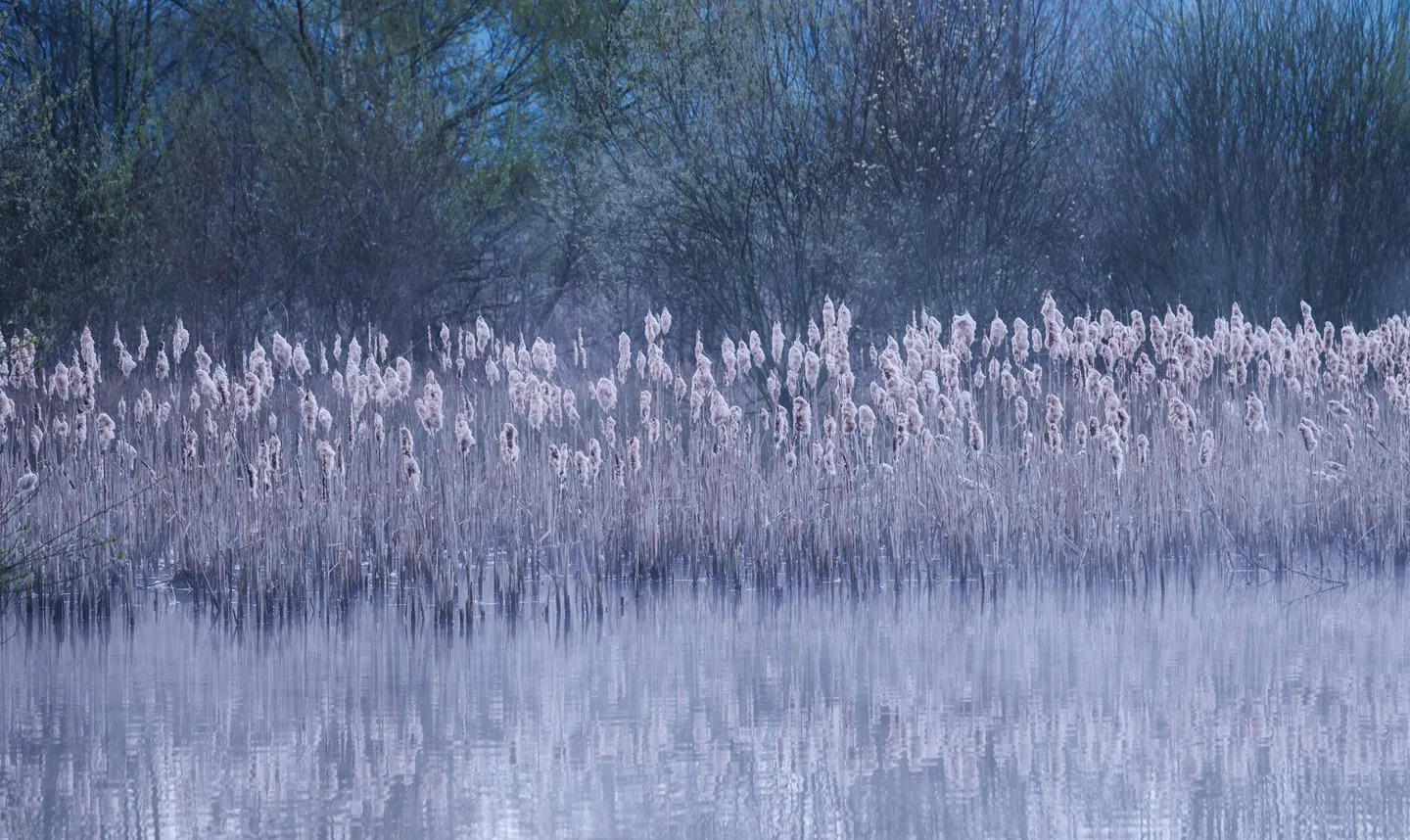
Photo by Heather Wilde on Unsplash
Reed bed systems treat domestic sewage using natural biological processes in constructed wetlands. For rural UK properties without mains drainage, they represent one option among several, each with distinct regulatory requirements, costs, and maintenance obligations. This guide examines reed beds across England, Scotland, Wales, and Northern Ireland, drawing from Environment Agency guidance, British Standards, and data from over 1,200 operational UK sites.
Regulatory frameworks across UK nations
England operates under General Binding Rules that allow most domestic reed bed systems without an Environmental Permit. Discharges to ground cannot exceed 2 cubic metres per day (approximately 13 people), while surface water discharges are capped at 5 cubic metres per day (approximately 33 people). However, regulations updated in October 2023 specify that reed beds discharging to watercourses under GBRs must meet relevant British Standards. Systems falling short require either upgrade to a package treatment plant or a bespoke Environment Agency permit.
Scotland follows different rules entirely. The Water Environment (Controlled Activities) Regulations 2011 requires SEPA authorisation for all sewage discharges—no GBR exemption exists. Properties with up to 10 dwellings need registration, while larger systems require full licensing. Discharges to phosphate-sensitive catchments including Loch Leven, Lunan Lochs, and Loch Flemington require additional licensing regardless of size.
Wales uses the Environmental Permitting Regulations 2010 with free registration for eligible systems. Northern Ireland requires a Consent to Discharge from NIEA for all private sewage systems under the Water (Northern Ireland) Order 1999, with one notable specification: properties discharging to watercourses with rainfall catchments under 2 km² must include a minimum 4m² reed bed.
Distance requirements from sensitive features
All UK nations enforce minimum distances from protected features. Septic tanks must sit at least 7 metres from habitable buildings, while discharge points require 10 metres from watercourses. Wells, boreholes, and springs need 50-metre clearance, and properties within 30 metres multiplied by the number of properties from public sewers must connect to mains drainage.
Protected areas impose stricter controls. New surface water discharges cannot occur within 500 metres of SACs, SPAs, Ramsar sites, SSSIs, freshwater pearl mussel populations, designated bathing waters, or protected shellfish waters. Ground discharges in Groundwater Source Protection Zone 1 require permits regardless of volume. The DEFRA Magic Map tool identifies nearby protected sites.
Planning permission requirements vary by local authority but typically apply to larger systems, installations in Conservation Areas, or works affecting Listed Buildings. Building Regulations approval (Part H in England and Wales) applies to all new installations.
System configurations and treatment mechanisms
Reed bed systems divide into three main types, each using different treatment processes suited to specific site conditions.
Vertical flow reed beds offer the most effective design for domestic applications. These systems use a free-draining layered matrix approximately 1 metre deep, where wastewater is applied in batches across the surface via distribution networks. As liquid percolates downward through graded sand and gravel layers, air is drawn into the substrate, creating aerobic conditions that convert ammonia to nitrates through nitrification. Vertical flow systems require approximately 2-3m² per person and need at least 1.5-metre fall for gravity operation.
Horizontal flow reed beds take a different approach. These shallower beds, typically 0.6 metres deep, maintain continuous wastewater flow from inlet to outlet with water levels 25-50mm below the gravel surface. This creates waterlogged, low-oxygen conditions necessary for denitrification—converting nitrates to nitrogen gas. Horizontal flow beds require only 1m² per person (minimum 6m² total) but prove less effective at ammonia removal and more prone to odour problems.
Hybrid systems combine both technologies for comprehensive nitrogen removal. A vertical flow bed handles initial treatment and nitrification, then effluent passes through a settlement tank to remove dead microbes before entering a horizontal flow bed for denitrification. Well-designed hybrid systems achieve 74% COD removal, 93% BOD removal, 50% total nitrogen removal, and 61% total phosphorus removal—superior to single-stage designs.
All configurations require primary treatment upstream, typically a septic tank or settlement tank compliant with EN 12566-1, to remove gross solids and prevent clogging.
Treatment performance in UK climate conditions
Reed bed systems can achieve strong effluent quality when properly designed and maintained, though seasonal variability affects performance throughout the year.
Performance data from UK installations shows well-functioning systems achieve BOD removal of 83-95% (effluent typically 1-4 mg/L), suspended solids removal of 80-97%, ammonia removal of 67-84% with vertical flow systems significantly outperforming horizontal flow, total nitrogen removal of 50-70% with hybrid systems achieving higher rates, phosphorus removal of 35-73% subject to media saturation over time, and pathogen reduction of 96-99% for E. coli with 2-4 log reduction for faecal coliforms.
UK discharge consents typically require BOD ≤20 mg/L and suspended solids ≤30 mg/L, standards that properly designed systems should meet. Relevant British Standards include EN 12566-3:2016 for small wastewater treatment systems (requiring 38-week testing of treatment performance) and BS 6297:2007+A1:2012 for drainage field design and installation.
Seasonal variation presents genuine challenges. Bacterial activity slows in cold temperatures, and treatment efficiency drops noticeably in autumn and winter. While sewage warmth typically prevents freezing in normal UK winters, severe winters in 2010/2011 caused systems in northern England and Scotland to freeze solid for weeks—one factor that has led some installers to stop recommending reed beds for properties in northern latitudes.
Complete system costs for 2024-2025
Understanding true costs requires looking beyond headline prices to the full picture of components, installation, permits, and lifetime maintenance.
Complete system costs vary by property size. A 1-2 bedroom property with 5 population equivalent needs 10-15m² reed bed area costing £3,850-£5,000 installed. Three to four bedroom properties with 6-8 population equivalent require 15-24m² at £4,850-£6,500, while five-plus bedroom homes with 10+ population equivalent need 30m²+ costing £5,850-£9,850.
These figures typically cover the reed bed itself installed “in the ground and working” but exclude several essential components. Septic tanks cost approximately £3,000 installed, pumping stations run £1,500-£2,000, humus tanks for hybrid systems add £1,500, and soakaways or drainage fields cost £2,000-£5,200. A complete professionally-installed system for a typical four-bedroom house therefore costs £10,000-£15,000.
Materials for partial self-installation break down as follows. HDPE/LDPE liner costs £2.68-£14.20/m² with a median of £6.24/m², geotextile protection runs £1.50-£3.00/m², treatment layer sand costs £30-£60/tonne, transition and drainage gravel runs £30-£50/tonne, reed plants (Phragmites australis) cost £2-£5 per plant at 4 plants/m², and distribution pipework runs £100-£300.
Permit and assessment costs include professional percolation testing at £350-£500 (though DIY is possible), standard discharge permit applications at £136, Building Control approval at £200-£500, and planning permission if required at £206 for householder applications.
Annual operating expenses
Reed beds offer significantly lower running costs than package treatment plants—zero electricity costs for gravity-fed systems versus £127-£457/year for powered alternatives. However, mandatory septic tank emptying costs £130-£260 annually, and professional maintenance visits run £75-£180/year. Total annual maintenance typically falls between £250-£600.
The major hidden cost is refurbishment. Research from Aston University in partnership with Severn Trent Water found that horizontal flow beds require complete refurbishment—removal and replacement of reeds and the entire gravel bed—every 7-10 years. Some practitioners dispute this, claiming well-maintained vertical flow systems can last 25+ years, but property owners should budget for significant refurbishment costs within the first decade.
Comparing ten-year total costs reveals reed beds at £15,000-£21,000, package treatment plants at £11,000-£20,000, septic tank plus drainage field at £11,000-£17,000, and cesspools at £45,000-£99,000.
Funding schemes in specific catchments
Traditional grants for private sewage systems have largely disappeared, but nutrient neutrality schemes in specific catchments offer fully-funded upgrades. The WCI Phosphate Offset Scheme provides free septic tank upgrades in Somerset covering River Parrett, Tone, Brue, and Axe catchments. Wiltshire’s Revamp Your Tank Scheme offers fully funded grants in the Hampshire Avon catchment via Wessex Rivers Trust. Norfolk Environmental Credits provides free conversions in Norfolk priority areas. Contact your local authority’s environmental services team to check for current schemes.
VAT considerations affect costs significantly. New-build installations are zero-rated when supplied by VAT-registered contractors. Self-builders purchasing materials directly can reclaim the 20% VAT through the DIY Housebuilders Scheme (form VAT431NB) within three months of completion. Existing property renovations attract the full 20% rate with no recovery available.
Installation process from site assessment through establishment
Successful installation follows a defined sequence, with several critical site assessments determining whether a system suits a particular property.
Site assessment includes groundwater source protection zone checks via DEFRA Magic Maps, soil percolation testing, groundwater level assessment during wet season, topographical survey for gradient, and proximity measurements to watercourses, buildings, wells, and boundaries.
The percolation test (Vp test to BS 6297:2007) determines soil suitability. Excavate a 300mm × 300mm × 300mm test hole, fill with water and allow to drain overnight, refill to 300mm and time the drop from 225mm to 75mm, divide elapsed seconds by 150 for Vp value, then repeat three times and calculate average. Results between Vp 15-100 indicate suitable soil for drainage fields. Values above 100 suggest slow drainage where reed beds may actually be advantageous, while values below 15 indicate soil too fast for adequate treatment.
Construction typically takes four to eight days. Excavation requires one to two days to mark dimensions at minimum 3m² per person, excavate to 0.8-1m depth, and compact earth banks. Liner installation takes one day to lay geotextile, install waterproof liner (minimum 1mm HDPE), install pipe penetrations with sealing, and test watertightness. Media installation requires one to two days to install base drainage pipes, add 150mm drainage gravel (20-40mm), 50mm transition gravel (6-10mm), and minimum 600mm treatment sand layer. Distribution and planting takes one day to install surface distribution pipework, position splash plates, plant reeds at 4 plants/m², and install outlet and level control.
Professional qualifications are not strictly mandated but recommended. The Constructed Wetland Association maintains a database of qualified designers and installers. Geomembrane welders should hold BS TWI certification, and larger systems warrant design by CIWEM-registered engineers or British Water accredited professionals.
Reeds take two to three growing seasons to fully establish, though systems function during this period. First-year care includes regular watering if dry, hand-weeding every two weeks during growing season, and forking the top 70-80mm periodically to maintain porosity. No reed cutting should occur in the first two years.
Maintenance requirements and health considerations
Understanding maintenance requirements is essential for determining whether reed beds suit your lifestyle and circumstances. Systems without proper maintenance can see performance drop to 20% of optimal capacity.
Monthly tasks include visual inspection of water levels and distribution, checking inlet and outlet pipes for blockages, monitoring plant health for stress or disease, and verifying fencing integrity. Quarterly tasks involve cutting back vegetation around pipes, removing debris from bed surroundings, checking for signs of clogging or waterlogging, and inspecting pumps if applicable.
Annual tasks include cutting reeds after second year’s growth (late autumn/winter), removing all dead plant material from bed surface, comprehensive system inspection, and water quality testing recommended for permitted discharges. Septic tank emptying is required at least annually—failure is the primary cause of reed bed clogging. Use only registered waste carriers and retain documentation.
Health risks during maintenance warrant serious attention. Documented cases include a pub owner contracting severe infection from a reed-cut on their arm, requiring intensive care within two hours. Recommended vaccinations include tetanus, diphtheria, typhoid, polio, leptospirosis, and hepatitis. Protective gloves and boots are essential.
DIY maintenance is feasible for most routine tasks with basic gardening skills and common sense. Tasks requiring professionals include septic tank emptying, major refurbishment, gravel replacement, and water quality testing.
Environmental and ecological benefits
Reed beds offer environmental credentials beyond simple wastewater treatment. Zero chemical additives, carbon sequestration, minimal greenhouse gas emissions compared to mechanical systems, and effluent quality approaching natural river water make them environmentally favourable. Vertical flow systems are more effective at nitrifying (converting ammonia to nitrates) than many package treatment plants.
Wildlife habitat creation provides measurable ecological benefits. Reed beds support rare bird species including bittern, bearded tit, and marsh harrier; mammals such as water voles and harvest mice; and diverse invertebrate populations. Grass snakes commonly nest in established vegetation. These biodiversity contributions align with UK conservation objectives and may be relevant for planning applications in rural areas.
Energy independence appeals to off-grid properties and sustainability-focused developments. Gravity-driven systems require no electricity whatsoever—even pumped systems typically draw only 60W equivalent, comparable to a light bulb. Aesthetic integration means reed beds can enhance rather than detract from rural properties. Unlike concrete treatment plant kiosks, established reed beds provide an attractive natural feature with optional “living soakaways” planted with irises and willows offering additional visual appeal.
Longevity claims vary, but well-maintained vertical flow systems can potentially last 25+ years according to some specialist installers who offer warranties to this duration. The 7-10 year refurbishment timeline appears more applicable to horizontal flow designs under heavier loading.
Limitations affecting suitability
Reed beds are not universally appropriate, and honest assessment of limitations is essential for informed decision-making.
Space requirements eliminate reed beds for smaller properties. A typical four-bedroom house needs 8-10m² of reed bed area alone, plus space for septic tanks and any drainage field. Some practitioners recommend doubling UK guideline sizing for reliability.
UK winter performance represents a genuine concern, not theoretical risk. During the 2010/2011 winters, systems in northern England and Scotland froze solid for weeks, leaving households without functioning sanitation. One established installer has stopped designing reed beds entirely due to climate concerns. Southern England properties face lower risk, but all UK owners should have contingency plans for extended freeze periods.
The two to three year establishment period means systems take time to reach optimal performance. Property owners expecting immediate results may find package treatment plants more suitable. Maintenance burden exceeds what many property owners anticipate. Regular weeding, annual reed harvesting, and health precautions during maintenance require ongoing commitment. Rental properties are particularly unsuitable as tenants are unlikely to perform necessary upkeep.
Property resale implications require sellers to inform buyers in writing about the system, provide maintenance records and manuals, and agree responsibility for any required upgrades. Some buyers prefer conventional systems with less owner involvement.
Professional resources and technical guidance
Property owners should engage qualified professionals for design and installation to ensure regulatory compliance and optimal performance.
ARM Reedbeds Ltd (01889 583811) offers consultancy, design, construction, refurbishment, and maintenance. They operate an R&D centre with 20+ wetland test cells and offer process guarantees with two-year maintenance contracts. Cress Water Solutions provides design, installation, and maintenance with contracts from three-monthly to annual, offering 25-year warranties on vertical flow systems. YES Reedbeds of Yorkshire works as an independent consultant with 20+ years experience throughout UK nations including Channel Islands.
British Water publishes Codes of Practice for installation, maintenance, flows and loads, and desludging, operating an Accredited Service Technician scheme. The Constructed Wetland Association maintains a database of UK sites and professionals. CIWEM (Chartered Institution of Water and Environmental Management) serves as the professional body for water and environmental specialists.
Key technical publications include BRE Good Building Guide GBG-42 Parts 1 & 2, BR 420: “Reed Beds for the Treatment of Domestic Wastewater”, CIRIA R180: “Review of the Design and Management of Constructed Wetlands”, and Environment Agency R&D Technical Report P2-159/TR2: “Guidance Manual for Constructed Wetlands”.
Regulatory contacts include Environment Agency (England) at 03708 506 506, SEPA (Scotland) at 0300 099 66 99, Natural Resources Wales at 0300 065 3000, and NIEA (Northern Ireland) at 0845 302 0008.
Comparison with alternative systems
Property owners should evaluate all viable alternatives before committing to a particular system.
Package treatment plants (brands include Klargester BioDisc, WPL Diamond, Tricel Novo) offer compact solutions requiring only 2-3m² footprint with consistent year-round performance unaffected by freezing. Capital costs of £7,000-£13,000 installed are comparable to complete reed bed systems, with higher annual running costs (£400-£700 including electricity and servicing) but 20-40 year lifespans without major refurbishment. For most properties, package plants represent the lower-maintenance choice.
Septic tanks with drainage fields remain viable where soil conditions permit (Vp 15-100). Since January 2020, direct discharge to watercourses is prohibited—all septic tank effluent must pass through a compliant drainage field for secondary treatment. Total installed cost of £9,000-£13,000 is similar to reed beds, with comparable running costs of £200-£400 annually. Drainage field lifespan ranges from 10-50 years depending on installation quality.
Cesspools should be considered only as a last resort when no other system is viable. While capital costs are lower (£5,000-£9,000), annual emptying costs of £4,000-£9,000 for a family of four make them economically catastrophic over time. Cesspools are illegal in Scotland.
Mound systems (raised drainage fields) solve problems where high water tables, shallow bedrock, or poor soil depth preclude standard drainage fields. They require pumping stations, professional design, and work only with package treatment plant effluent (not septic tanks). Costs of £8,000-£15,000 are higher than conventional drainage fields, and the raised earth mound creates visual impact.
Decision criteria for rural properties
Reed beds represent an appropriate choice when circumstances align properly, but a poor choice when they don’t.
Reed beds are most appropriate when adequate land is available (minimum 10m² for average household), the property is in southern or central UK where severe winters are less common, the site offers at least 1.5m fall for gravity vertical flow operation, the owner is committed to regular maintenance and comfortable with health precautions, ecological and aesthetic benefits are valued priorities, long-term residence justifies investment in establishment and potential refurbishment, and the property is owner-occupied rather than rented.
Reed beds are inappropriate when space is limited or site is flat without budget for pumping, the property is in northern Scotland or exposed northern England locations, the owner cannot or will not perform regular maintenance, immediate full performance is required, children or pets have regular unsupervised garden access, the property may be sold within five to seven years, or simpler, lower-maintenance solutions are acceptable.
For properties where reed beds aren’t suitable, a package treatment plant typically offers the best combination of compact footprint, reliable performance, and manageable maintenance for UK rural applications.
Assessing fit for your circumstances
Reed bed systems offer rural UK property owners a sustainable wastewater solution that creates ecological value while producing high-quality effluent through natural processes. Zero energy requirements, wildlife habitat creation, and integration into rural landscapes make them appealing for environmentally-conscious homeowners with adequate space and maintenance commitment.
However, practical realities demand honest assessment. Installed costs of £10,000-£15,000 for complete systems are comparable to alternatives, but the 7-10 year refurbishment requirement, maintenance burden, and winter vulnerability in northern regions mean reed beds suit only a subset of UK properties. The two to three year establishment period and genuine health risks during maintenance further limit appropriateness.
The decision framework is straightforward. If you have space, mild climate, long-term commitment, and genuine interest in maintaining a natural system, reed beds can reward your investment with ecological benefits and aesthetic value. If any of these factors are missing, a package treatment plant likely represents a more practical solution delivering reliable performance with less owner involvement. UK experience shows that reed beds function best as a lifestyle choice as much as a technical solution—they reward engaged owners who appreciate their ecological value, while frustrating those seeking simply to solve a drainage problem with minimum ongoing involvement.