
Understanding Poverty in Scotland's Rural and Island Communities
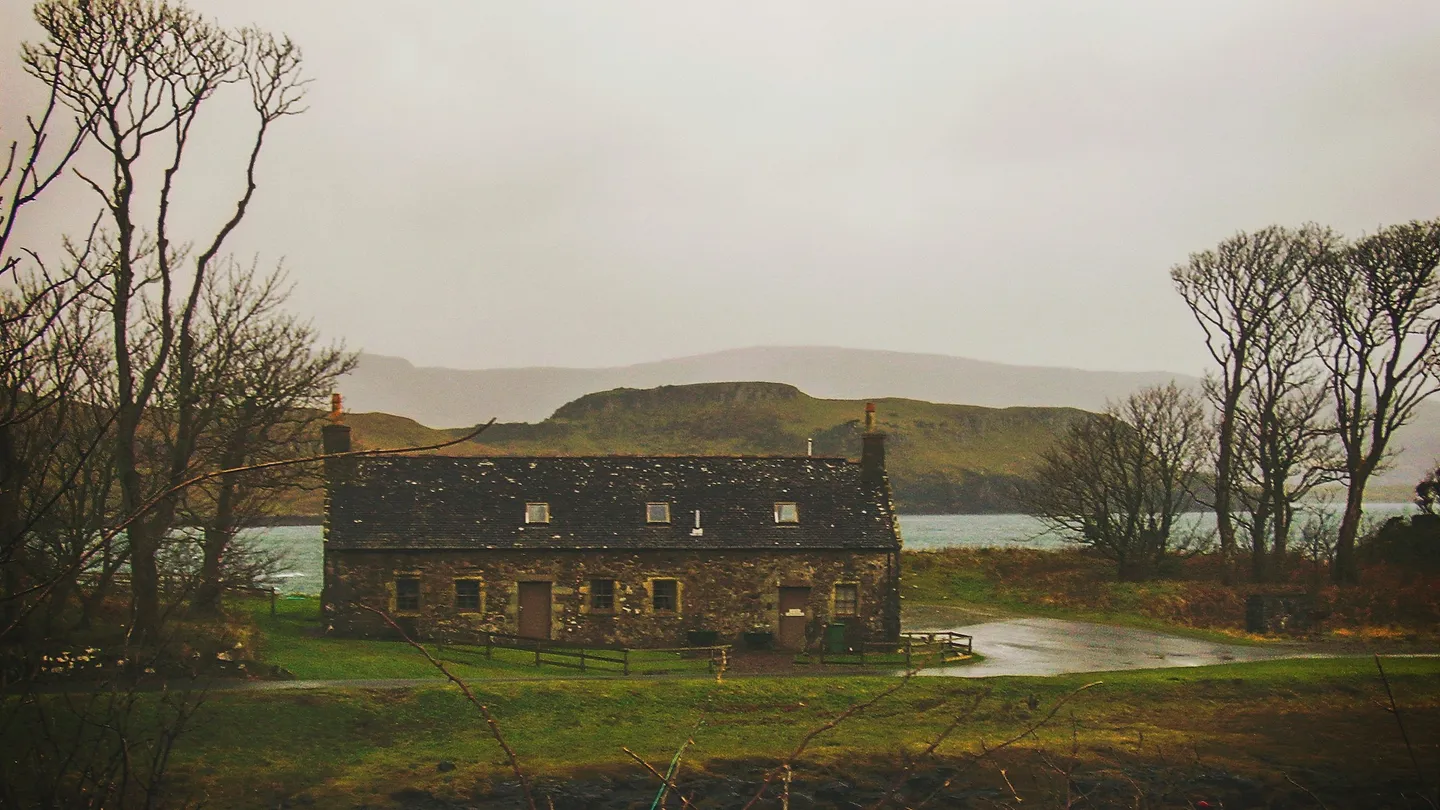
Photo by K. Mitch Hodge on Unsplash
A government research study reveals significant changes in poverty patterns across rural and island Scotland between 2010 and 2017, highlighting geographic variations, economic and demographic factors, and the additional costs of rural living.
A 2010 Scottish Government research study tracked changes in poverty patterns across rural and island Scotland between 2010 and 2017. The research, conducted by King’s College London, analyzed multiple data sources to follow how poverty affects different rural areas and identified the main factors behind these trends.
The findings show that 15% of rural residents live in relative poverty, roughly 170,000 people. While this rate is lower than the 20% urban poverty rate, the overall figure hides wide variation. Remote rural areas saw poverty increase from 13% to 18% between 2012 and 2017, while urban areas remained stable during the same period.
Geographic variations in rural poverty
Scotland’s rural areas are not uniform in their economic conditions. The research distinguishes between accessible rural areas close to urban centers, remote rural areas with limited connections, remote small towns, and island communities. Each faces different challenges.
Accessible rural areas maintained relatively stable economic conditions between 2010 and 2023. These communities benefited from proximity to urban employment centers and services, with population growth and lower poverty rates compared to more remote locations.
Remote rural areas saw more pronounced changes. Between 2012 and 2017, these communities experienced notable poverty increases. The employment rate in remote rural areas fell from 83.6% in 2014 to 76.8% in 2016, though it subsequently recovered. Demographic shifts also occurred, with 21% of residents now over 65 compared to 16% in large urban areas.
Remote small towns faced particularly sharp pressures. The working-age population in these communities dropped by 8.2% between 2011 and 2021. Employment rates fell from 80.5% to 71.0% between 2013 and 2014 before gradually recovering. Owner-occupation declined from 69.4% to 63.2% between 2010 and 2023, while private renting increased.
Island communities present unique circumstances. Scotland’s 93 inhabited islands house just over 100,000 people across six local authorities. These communities face specific challenges related to ferry connectivity, housing availability, and service access.
Economic and demographic factors
Several interconnected factors contribute to rural poverty patterns. Working-age populations in remote areas have declined, while the proportion of older residents has increased. Lone parent families have become more common among low-income rural households, and in-work poverty has emerged as a growing problem.
Housing tenure changes reflect broader economic pressures. Between 2010 and 2023, children in rented housing saw poverty rates increase from roughly one in three to one in two. Pensioners in rented housing similarly experienced increases, with three in ten now in relative poverty compared to two in ten previously.
The Scottish Government’s rural data dashboard indicates that median gross annual pay is lowest in remote rural areas. A notable rural gender pay gap persists, with differences of £4,790 in remote rural areas and £3,878 in accessible rural areas.
Additional costs of rural living
Rural residents face higher living costs across multiple categories. Research indicates that additional minimum living costs in remote rural Scotland add 15-30% to household budgets compared to urban areas. These additional expenses affect food, transport fuel, housing, and access to services.
Fuel poverty is a heavy burden. Nearly 80% of fuel poor households in remote rural areas were in extreme fuel poverty in 2019. For island communities, approximately 47% of households face fuel poverty. Rural properties typically have lower energy efficiency than urban ones, and most rural dwellings fall outside gas grid coverage, requiring reliance on electricity or unregulated fuels.
Transport costs create another financial strain. Rural residents pay an extra £50 per week on travel compared to urban residents due to limited public transport options. This amounts to forced car ownership where households must maintain vehicles despite limited financial capacity. The average return cost of traveling to college illustrates the gap: £6 in Scotland overall but £10.50 in remote rural areas.
Service centralization compounds these challenges. Only 45% of adults in accessible rural areas and 48% in remote rural areas were satisfied with the quality of public services including local health, schools, and public transport. Journey times to services remain longer than elsewhere in Scotland, and while most homes can access broadband, speed and quality remain lower in many rural areas.
Housing availability and affordability
Housing pressures have intensified across rural Scotland. Social housing availability remains lower in rural and island communities than urban areas, while second home ownership and short-term holiday lets have strained residential housing availability. Between 2016 and 2019, Scotland saw a three-fold increase in short-term holiday lets, with half located in rural areas.
Island communities face particularly severe housing challenges. Only one in ten islanders agreed there is enough housing to meet local demand in 2023, down from two in ten in 2020. House prices in Scottish island regions have risen faster than mainland Scotland. Remote rural areas and islands have higher percentages of empty dwellings and second homes, creating situations where housing stock exists but remains unavailable to those who need it.
Childcare availability presents another constraint, particularly for lone parent families. The lack of local and flexible childcare means parents and carers in rural areas are less likely to use all 1,140 funded hours and more likely to experience difficulties affording childcare.
Policy implications and recommendations
Professor Sharon Stevelink, lead author and Professor of Applied Epidemiology and Occupational Health at King’s College London, noted that poverty can have real effects on physical and mental wellbeing. The research shows that while rural poverty rates remain lower than urban rates overall, wide disparities exist within rural categories.
The research methodology analyzed five primary datasets including the Family Resources Survey, Scottish Household Survey, and Scottish House Condition Survey. Stakeholder engagement included experts and lived-experience panel members from Aberdeenshire and Argyll and Bute. Poverty rates are presented using three-year averages to provide more reliable estimates.
The findings point to several policy areas needing attention. Transport infrastructure, fuel poverty reduction, childcare availability, and housing pressures all call for targeted interventions. The Islands (Scotland) Act 2018 established duties for Islands Community Impact Assessments, and the Rural Lens Toolkit pilot launched in 2024-25 to make sure universal policies benefit remote and island communities.
The research stresses that interventions must be place-based, with support that allows community-led approaches and tailoring to specific island groups and age demographics. Stronger partnership working across issues and sectors at national, regional, and local levels is needed to address the interconnected causes of poverty.
The report supports piloting a Minimum Income Guarantee in rural areas, which would establish an income floor while supporting local enterprise. Recognition of lived experiences as valid qualitative data, support for local data analysis, and filling data gaps at sub-local authority levels would strengthen the evidence base for targeted interventions.
Understanding structural differences
Rural poverty differs structurally from urban poverty in several ways. Geographic remoteness, declining populations, limited transport and digital connectivity, and the “rural premium” created by limited market competition all contribute to distinct poverty patterns. Statistical data may not fully capture these realities when income indicators overlook variations in rural living costs.
The Poverty Alliance notes that rural poverty often remains hidden behind attractive landscapes, making it harder for policy to recognize and respond to. Volatile and unpredictable incomes, characteristic of land-based industries, tourism employment, seasonal work, and casual contracts, leave rural households vulnerable to economic disruptions.
External economic shocks including Brexit, the COVID-19 pandemic, the war in Ukraine, and the subsequent cost-of-living crisis have worsened structural vulnerabilities in rural communities. Land-based industries saw real growth between 2015 and 2023, but the energy supply sector declined markedly during this period.
Moving forward
The research shows that addressing rural poverty requires understanding its distinct characteristics and causes. Simple income-based measures fail to capture the structural disadvantages and cost premiums that define rural poverty. The divergence in poverty trends between 2012 and 2017, with remote areas experiencing increases while urban areas remained stable, indicates that rural communities face challenges requiring tailored solutions.
Skills development presents ongoing challenges, with remote rural and island areas seeing slower improvements in adult qualification levels than Scotland overall between 2010 and 2020. Access to training and educational advancement remains limited in the most remote locations.
Rural poverty is complex, and no single intervention will address all contributing factors. Demographic pressures, housing affordability constraints, and fuel poverty all require sustained policy attention. Understanding these interconnected challenges provides a starting point for developing effective responses that account for geographic variations across Scotland’s diverse rural and island communities.